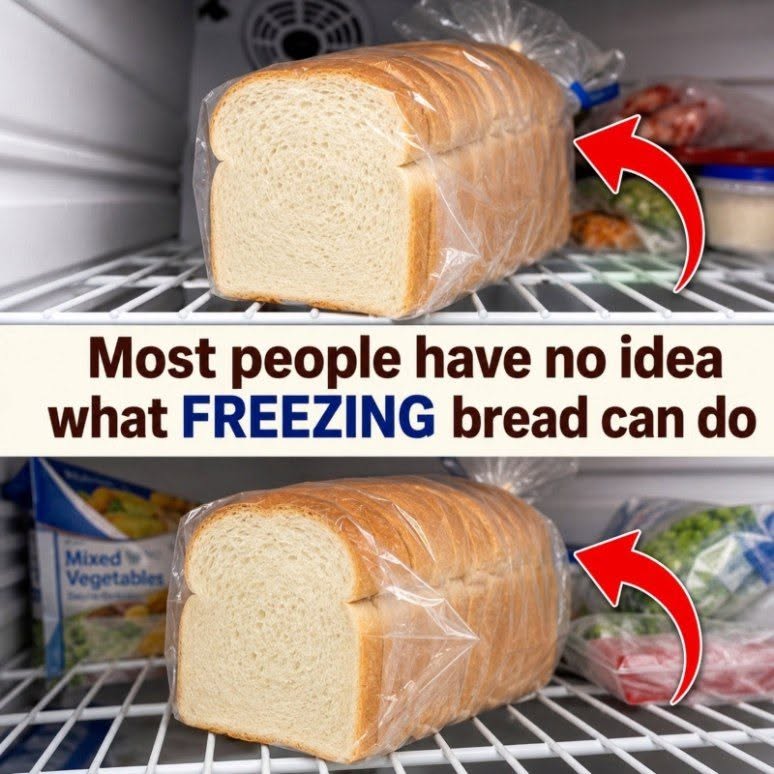
When you throw bread into the freezer, a few interesting things happen—but not in a “magic transformation” way.
First, the water inside the bread quickly freezes into tiny ice crystals. That basically pauses the staling process, because staling is mostly caused by starch molecules slowly reorganizing and pushing moisture out. Freezing “locks” everything in place.
Second, the texture doesn’t change much while it’s frozen—but it will feel very different after thawing. If you just leave it on the counter, it often turns slightly dry or a bit rubbery because some moisture distribution gets disrupted.
The best part: freezing actually helps preserve bread far better than keeping it in a breadbox or fridge. In fact, refrigeration is usually worse because it speeds up staling.
If you toast or reheat frozen bread directly, it can come surprisingly close to fresh—especially slices. The heat re-gelatinizes the starch and brings back softness inside while crisping the outside.
So in short: freezing bread is basically hitting “pause” on its aging… but how you thaw it decides whether it comes back nice or a bit meh.