That’s a classic clickbait setup, and it’s usually referring to a few common, mostly harmless skin conditions—but the exact cause depends on how the spots look.
Here are the most likely explanations a skin specialist would consider:
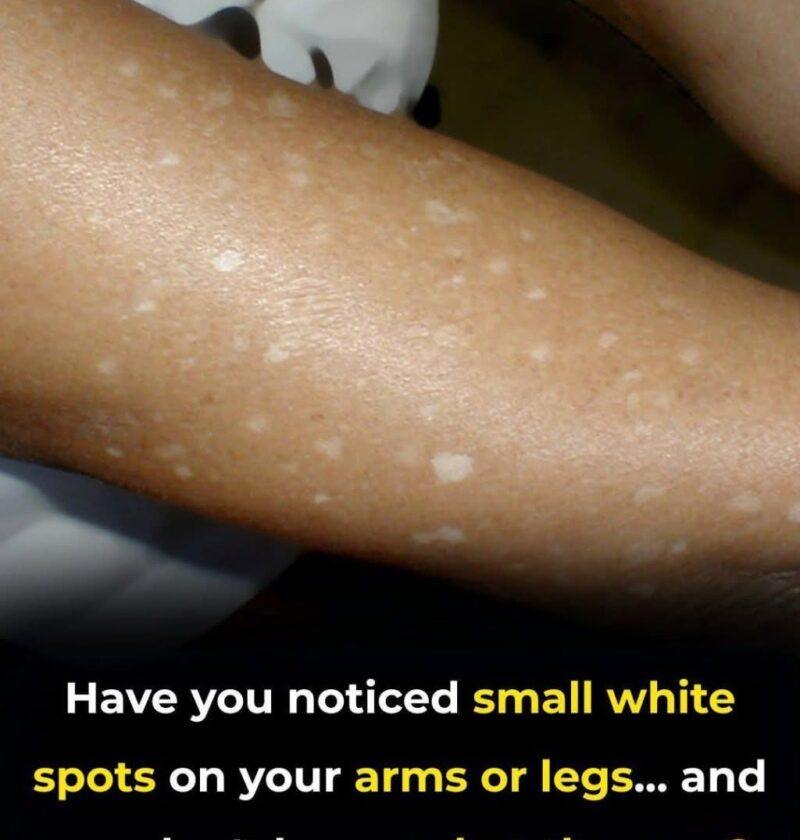
🤍 1. Idiopathic guttate hypomelanosis (most common in adults)
- Small white “confetti-like” spots
- Usually on arms and legs
- More common with age and sun exposure
- Harmless, but permanent or slow to improve
🌞 2. Sun-related pigment loss
Long-term sun exposure can reduce melanin in small patches, especially on:
- Forearms
- Shins
- Shoulders
🧴 3. Dry skin / mild eczema changes
- Slightly lighter patches
- Often after itching or irritation
- More visible in dry climates
🦠 4. Fungal infection (tinea versicolor)
- Can cause lighter (or darker) patches
- Often on chest, back, sometimes arms
- May have mild scaling or itching
⚠️ 5. Vitiligo (less common but important)
- Smooth, sharply defined white patches
- Can gradually spread
- Caused by loss of pigment cells
🧠 When to pay attention
You should consider a dermatologist visit if:
- Spots are spreading quickly
- They have clear white borders
- You notice hair turning white in patches
- Itching, scaling, or discomfort is present
✔️ Bottom line
Most small white spots are harmless and related to sun exposure or aging skin, but fungal issues or pigment conditions like vitiligo are possible depending on appearance.
If you want, you can describe what your spots look like (size, texture, whether they itch), and I can narrow it down more accurately.