Urine color can give quick clues about hydration and sometimes health changes, but it’s not a diagnosis on its own.
Here’s what different colors usually mean:
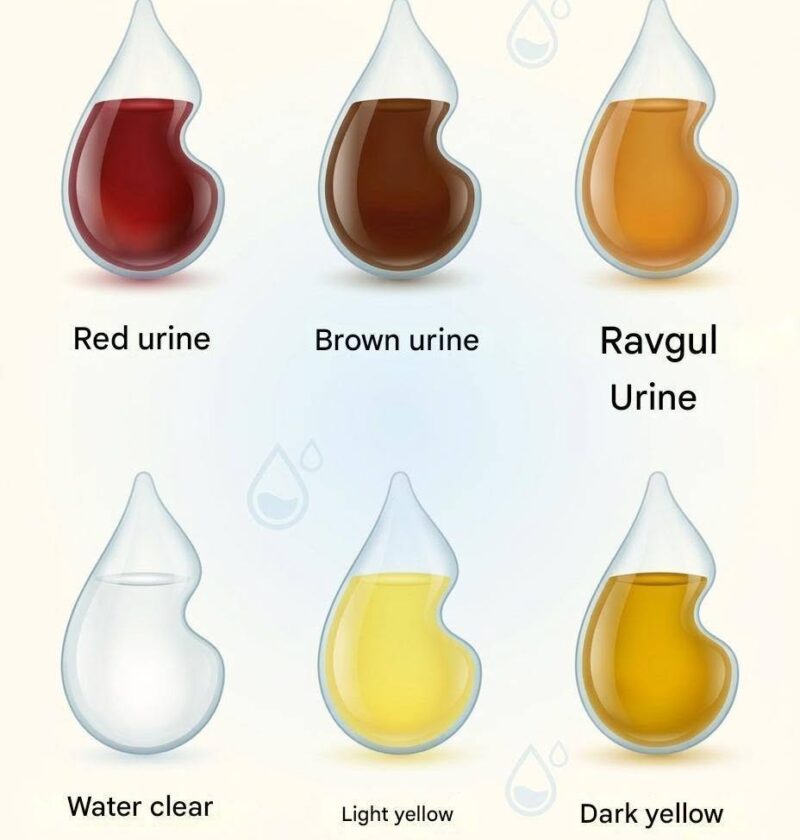
💧 Clear / very light yellow
- You’re very well hydrated
- Sometimes from drinking a lot of water
- If constantly clear, you might be overhydrating slightly
🌾 Pale yellow (ideal)
- Normal, healthy hydration
- Best “healthy range”
🌕 Dark yellow / amber
- Most common sign of dehydration
- You may need more fluids
- Can also happen after sweating, exercise, or fever
🍯 Honey / brownish yellow
- More concentrated urine (dehydration)
- Sometimes from vitamins (especially B-complex) or medications
- If persistent, should be checked
🟠 Orange
Possible causes:
- Dehydration
- Certain medicines or supplements
- Sometimes liver or bile-related issues if long-lasting
🌸 Pink or red
Important to evaluate:
- Could be blood in urine (infection, stones, etc.)
- Or harmless foods like beetroot or berries
- If not food-related, needs medical attention
🟢 Blue or green (rare)
- Food coloring or medications
- Occasionally rare metabolic conditions
- Usually harmless if temporary
☁️ Cloudy or milky
- Possible urinary tract infection
- Dehydration
- Sometimes crystals or protein in urine
⚠️ When to see a doctor
Seek medical advice if:
- Red/pink urine not linked to food
- Persistent dark urine despite hydration
- Pain, burning, fever, or back pain
- Foamy or consistently cloudy urine
🧠 Bottom line
Urine color mainly reflects hydration level, and most changes are harmless—but persistent or unusual colors should be checked.
If you want, I can also explain a simple “hydration check system” using urine color + thirst + timing so you can monitor it more accurately.