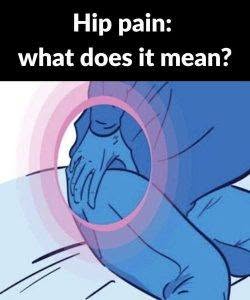
Hip pain can mean many different things, from a simple muscle strain to a problem inside the hip joint. The meaning often depends on where the pain is, what triggers it, and how long it has been present.
Common causes of hip pain
1. Muscle or tendon strain
- Pain after exercise, lifting, walking more than usual, or a sudden movement.
- May feel like soreness, tightness, or aching.
2. Bursitis (inflamed cushioning sacs around the hip)
- Often causes pain on the outer side of the hip.
- May hurt when lying on that side, climbing stairs, or getting up from a chair.
3. Arthritis (wear and tear or inflammation of the joint)
- Common with aging.
- May cause stiffness, reduced range of motion, and pain in the groin, thigh, or hip area.
4. Hip joint problems
- Conditions such as cartilage damage or labral injuries can cause:
- Clicking or catching sensations
- Deep groin pain
- Pain with twisting movements
5. Nerve-related pain
- Problems from the lower back (such as sciatica) can cause pain that travels from the back or buttock into the hip and leg.
What you can try for mild hip pain
- Rest from activities that worsen the pain (but avoid complete inactivity).
- Apply ice for a new injury or swelling; heat may help muscle stiffness.
- Gentle stretching and low-impact activity such as walking or swimming may help.
- Use pain medicines only as directed and consider medical advice if you have other health conditions.
See a healthcare professional if:
- Pain is severe or follows a fall or injury.
- You cannot put weight on the leg.
- The hip is swollen, red, or hot.
- You have fever, unexplained weight loss, numbness, or weakness.
- Pain lasts more than a few weeks or is getting worse.
To narrow it down, tell me:
- Where is the pain? (groin/front, outer hip, buttock, or back)
- Your age?
- Did it start suddenly or gradually?
- Does it hurt more when walking, lying on that side, or sitting?