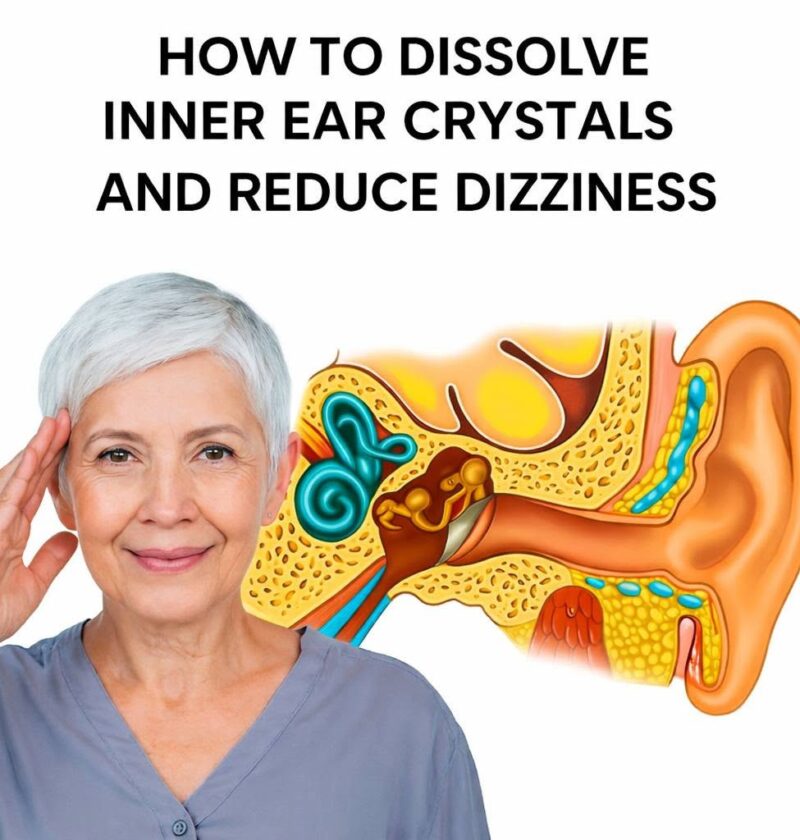
If by “inner ear crystals” you mean the tiny calcium carbonate particles that have moved out of place in the inner ear, this is usually benign paroxysmal positional vertigo (BPPV). The crystals (otoconia) can end up in a semicircular canal and make your brain receive incorrect motion signals, causing brief episodes of spinning—often when you roll over in bed, look up, bend down, or change head position.
Ways to treat BPPV and reduce vertigo
1. Try a canalith repositioning maneuver (most common treatment)
- The Epley maneuver is designed to guide the crystals back where they belong.
- It is best done after confirming which ear is affected (usually with a Dix–Hallpike test by a clinician or physical therapist), because the steps differ depending on the side.
- Many people improve after 1–3 sessions.
2. Avoid provoking movements temporarily
- Move your head slowly when getting up.
- Sit on the edge of the bed for a moment before standing.
- Avoid sudden bending or looking upward until symptoms improve.
3. Stay active once safe
- Too much avoidance of movement can prolong dizziness. Gentle normal movement helps your balance system recalibrate.
4. Manage symptoms
- If nausea is severe, a healthcare professional can advise whether short-term anti-nausea or motion-sickness medicines are appropriate.
- These medicines generally do not fix the crystal problem itself.
When to get medical help urgently
Seek urgent care if vertigo comes with:
- New weakness, numbness, trouble speaking, confusion, fainting
- Severe headache unlike usual
- Chest pain
- New hearing loss in one ear
- Trouble walking that is severe or persistent
It’s also worth seeing a clinician (ENT, neurologist, or vestibular physical therapist) if:
- This is your first episode and you’re unsure it’s BPPV
- Symptoms last continuously for hours or days rather than brief spells
- It keeps coming back despite maneuvers
If you tell me:
- How long the spinning episodes last (seconds, minutes, hours?),
- What triggers them (rolling in bed, looking up, standing, etc.), and
- Which ear feels affected (left/right/unknown),
I can help you figure out whether it sounds like BPPV and which approach is most appropriate.