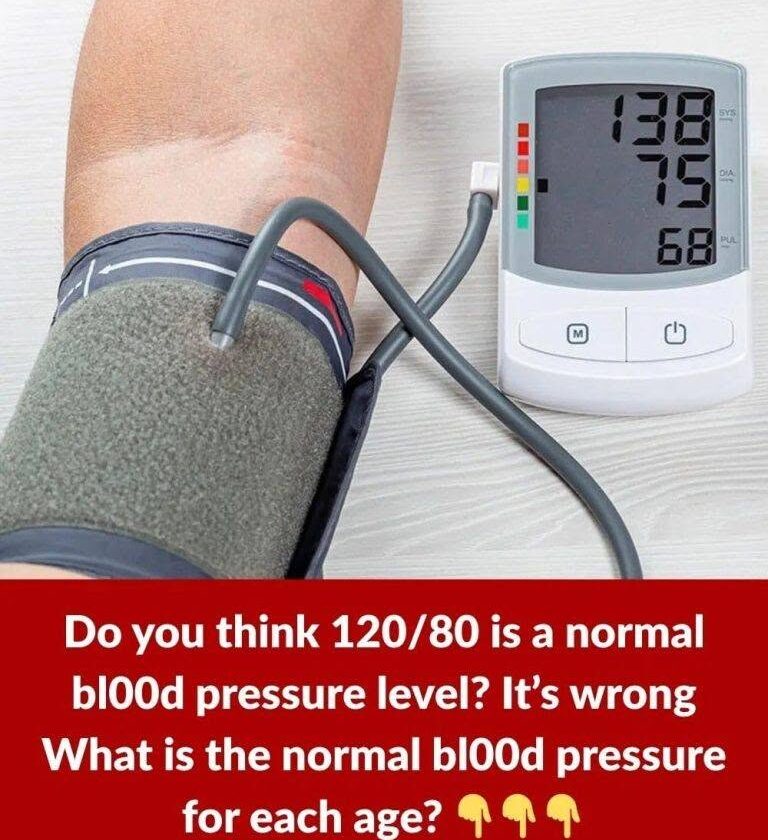
Blood pressure does not have a different “normal” value for every age. For most adults, the same general categories are used.
| Age | Normal Blood Pressure |
|---|---|
| Newborn (0–1 month) | About 60–90 / 20–60 mmHg |
| Infant (1–12 months) | About 80–100 / 55–65 mmHg |
| Toddler (1–3 years) | About 90–105 / 55–70 mmHg |
| Preschool (3–5 years) | About 95–110 / 60–75 mmHg |
| School-age (6–12 years) | About 97–120 / 60–75 mmHg |
| Teenager (13–17 years) | About 110–120 / 65–80 mmHg |
| Adults (18 years and older) | Less than 120/80 mmHg |
Adult blood pressure categories
- Normal: Less than 120/80 mmHg
- Elevated: 120–129 and less than 80
- High blood pressure (Stage 1): 130–139 or 80–89
- High blood pressure (Stage 2): 140/90 mmHg or higher
- Hypertensive crisis: 180/120 mmHg or higher (requires immediate medical evaluation)
A few important notes:
- Blood pressure tends to increase with age, but higher values are not considered “normal” just because someone is older.
- A single reading doesn’t diagnose high blood pressure. It’s usually confirmed with multiple measurements taken on different occasions.
- Blood pressure should be measured after sitting quietly for about 5 minutes, with the arm supported at heart level.
If you tell me your age and your blood pressure reading (for example, 128/78), I can help explain what it means.