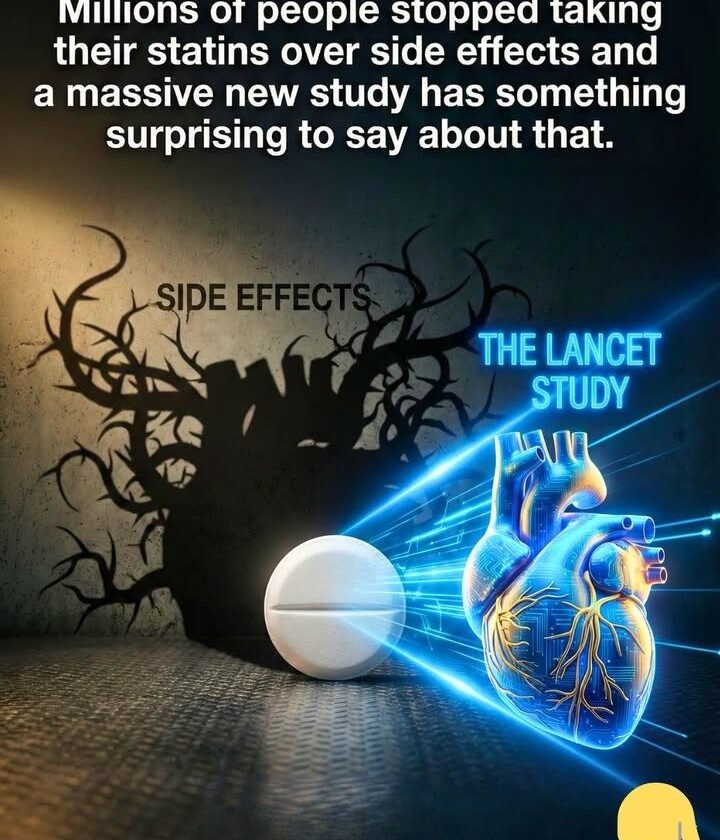
You’re referring to a growing body of research on people stopping Statins because of perceived side effects—especially muscle pain—and a large recent analysis (often described in headlines as involving ~150,000 patients) that challenges how much of that is actually caused by the drugs themselves.
The main takeaway from studies like this is:
A big chunk of reported “statin side effects” may not be caused by the medication at all, but by what’s known as the nocebo effect—when expectations of harm lead people to experience real symptoms even on placebo.
Across large datasets and re-analyses of clinical trials, researchers consistently find that:
- Muscle pain and fatigue are reported at similar rates in people taking statins and those taking placebo pills.
- Many patients who stop statins due to symptoms can restart them later without symptoms returning.
- The actual risk reduction in heart attack and stroke from staying on statins is substantial, but is often lost when people discontinue early.
So the “thinking shift” these studies are pointing to is:
A lot of statin intolerance may be perceived rather than pharmacological—and stopping the drug might sometimes remove a protective treatment without solving the original symptom problem.
That doesn’t mean side effects are imaginary or never real. A smaller subset of patients do have genuine statin-related issues, and those cases matter. But the newer evidence suggests the problem is being over-attributed to the drug in routine practice.
If you want, paste the article or headline you saw—I can break down that specific study and what it actually found, since these headlines often simplify the details quite a bit.