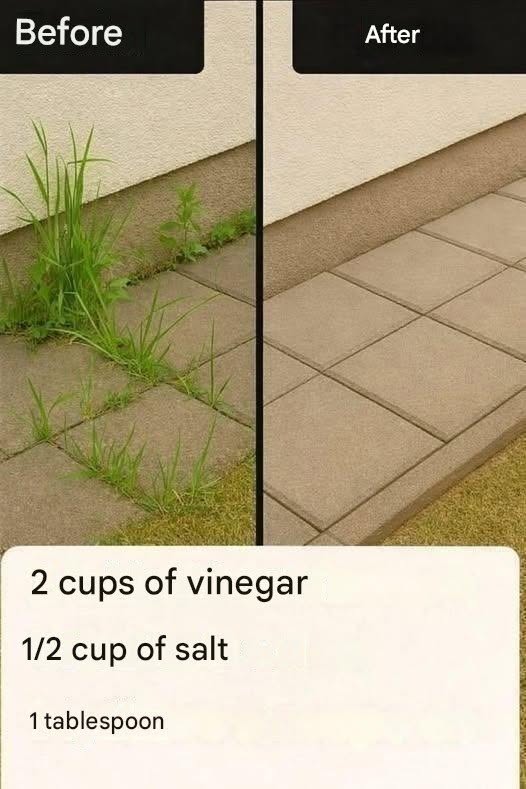
A “super-effective homemade herbicide” is often exaggerated in online posts, but you can make simple non-selective weed killers at home. Just be careful: these don’t only kill weeds—they can also harm grass, flowers, and soil life.
Here are safe, commonly used DIY options and how they actually work:
🌿 Homemade herbicide options
1. Vinegar-based weed spray
Vinegar
How to make:
- 1 liter white vinegar (stronger = better)
- 2–3 tablespoons salt (optional)
- A few drops dish soap
How it works:
- Acetic acid dries out leaves
- Soap helps it stick to plants
Use:
- Spray directly on weeds in sunlight
⚠️ Important:
- Kills only top growth, not deep roots
- Can damage soil if overused
2. Salt + water solution (use carefully)
- 1 part salt + 3 parts water
- Spray on cracks in pavements or driveways only
⚠️ Warning:
- Salt can make soil infertile for a long time
- Do NOT use in gardens or near plants you want to keep
3. Boiling water method (safest)
- Pour boiling water directly on weeds
- Works best for cracks and small patches
✔️ No chemicals
✔️ Immediate effect
❌ May need repeat application
4. Vinegar + boiling water combo (light use)
- Vinegar spray followed by hot water can increase stress on weeds
- Still not a permanent root killer
🧠 Key reality most “viral hacks” ignore
- Homemade herbicides are non-selective (they kill any plant they touch)
- They are usually temporary solutions
- Deep-rooted weeds often regrow unless physically removed
⚠️ Safety tips
- Wear gloves and avoid skin contact
- Do not inhale spray mist
- Keep away from children and pets
- Do not mix randomly with bleach or chemicals
🧭 Bottom line
Homemade herbicides can help with small, visible weeds, especially in cracks and driveways, but they are not as strong or long-lasting as commercial weed killers.
If you want, I can show you a safe garden-friendly weed control plan that won’t damage soil or future plants.