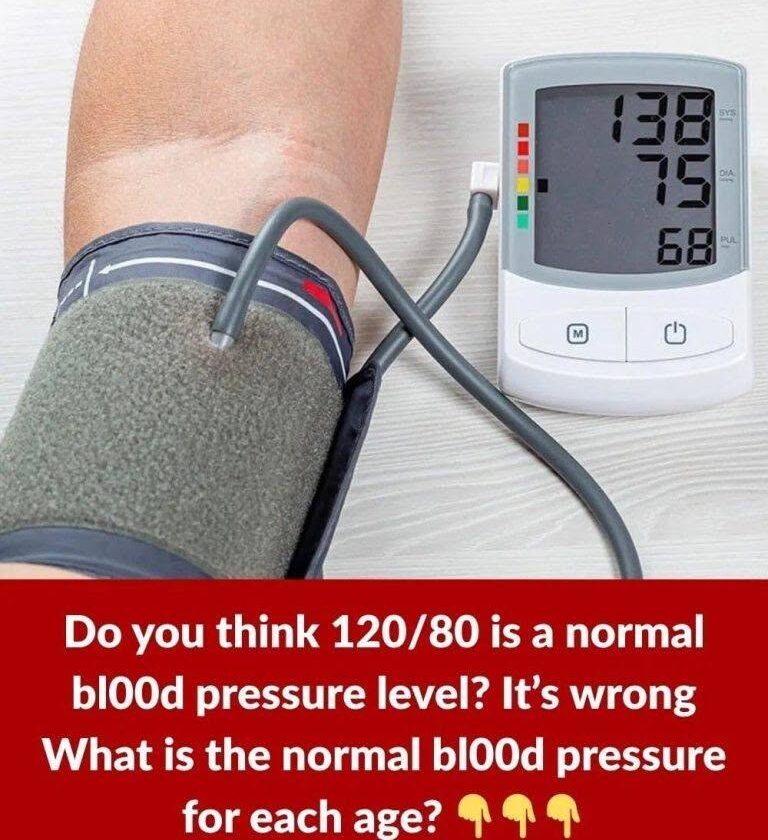
Blood pressure changes with age, but in adults the focus is less on “age-specific normal” and more on staying within a healthy range.Here’s a clear breakdown:
Normal Blood Pressure by Age Group (Approximate)
| Age | Normal Blood Pressure (mmHg) |
|---|---|
| Newborn (0–1 month) | 60–90 / 20–60 |
| Infant (1–12 months) | 80–100 / 55–65 |
| Toddler (1–3 years) | 90–105 / 55–70 |
| Preschool (3–5 years) | 95–110 / 60–75 |
| Child (6–12 years) | 100–120 / 60–75 |
| Teen (13–18 years) | 110–120 / 65–80 |
| Adult (18+ years) | Less than 120 / less than 80 |
Adult Blood Pressure Categories (Important)
For adults, doctors usually use these ranges:
- Normal: <120 / <80
- Elevated: 120–129 / <80
- High (Stage 1): 130–139 or 80–89
- High (Stage 2): ≥140 or ≥90
- Crisis: ≥180 / ≥120 (needs urgent care)
Key points to understand
- Blood pressure naturally rises slightly with age due to stiffening arteries.
- However, a reading above 130/80 is not considered normal in adults, even in older age.
- One reading is not enough—blood pressure should be checked on multiple occasions.
When to be concerned
Seek medical advice if you have:
- Repeated high readings
- Headaches, dizziness, chest pain, or shortness of breath
- Very high readings (especially above 180/120)
If you want, tell me your age and blood pressure reading—I can interpret it for you.