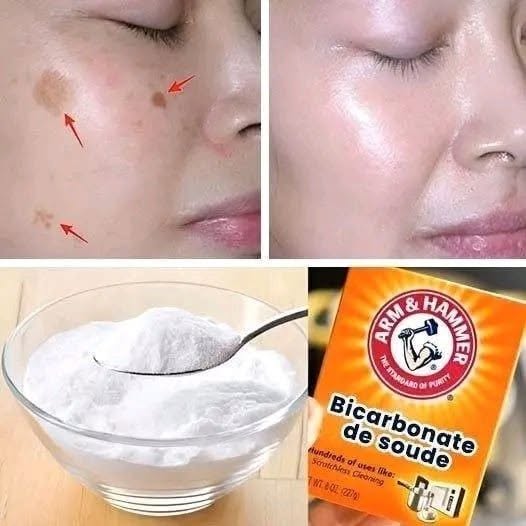
Claims that baking soda can remove dark spots, wrinkles, and dark circles are not supported by strong scientific evidence, and using it on your face can sometimes do more harm than good.
Why baking soda may be problematic
Baking soda (sodium bicarbonate) is alkaline, while healthy skin is naturally slightly acidic. Applying baking soda to the face can:
- Disrupt the skin barrier
- Cause dryness and irritation
- Lead to redness or burning, especially in sensitive skin
- Potentially worsen some skin conditions
What about dark spots?
Dark spots (hyperpigmentation) are more effectively treated with ingredients that have evidence behind them, such as:
- Sunscreen (daily use is essential)
- Vitamin C
- Niacinamide
- Azelaic acid
- Retinoids (where appropriate)
- Certain chemical exfoliants recommended by a dermatologist
What about wrinkles?
No topical baking soda treatment has been shown to reduce wrinkles. Approaches with better evidence include:
- Daily sunscreen
- Retinoids
- Moisturizers
- Healthy lifestyle habits (sleep, smoking avoidance, nutrition)
What about dark circles?
Dark circles can have many causes, including genetics, aging, allergies, lack of sleep, or pigmentation. Baking soda is not a proven treatment. Depending on the cause, options may include:
- Adequate sleep
- Treating allergies
- Sun protection
- Certain topical products (e.g., caffeine, retinoids, vitamin C)
If you still want to try it
If you choose to use baking soda on your skin despite the risks:
- Do a small patch test first.
- Avoid the eye area.
- Stop immediately if irritation occurs.
- Do not use it frequently or as a substitute for proven skin-care treatments.
If you’re mainly concerned about dark spots, wrinkles, or dark circles, I can suggest evidence-based options tailored to your skin type and budget.