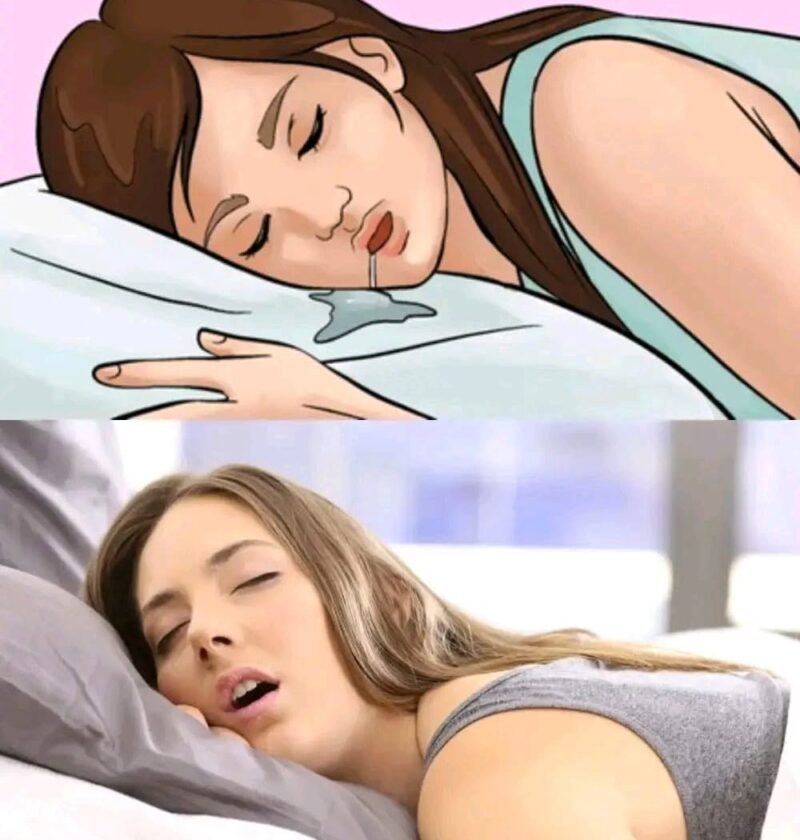
Drooling during sleep is usually harmless, but if it happens often and in large amounts, it can sometimes be linked to underlying issues. It doesn’t automatically mean disease—but here are 6 conditions doctors may consider if it’s persistent:
😴 1. Sleep apnea
One of the most common associations
- Breathing pauses during sleep
- Mouth opens to breathe → saliva escapes
- Other signs: loud snoring, daytime fatigue, morning headaches
🤧 2. Nasal blockage (allergies or sinus issues)
If you can’t breathe well through your nose:
- You breathe through your mouth at night
- Saliva is more likely to drip out
- Common causes: allergies, sinusitis, deviated septum
🧠 3. Neurological conditions (rare)
Certain nerve or brain conditions can affect swallowing control:
- Parkinson’s disease
- Stroke (especially if other symptoms exist)
- Cerebral palsy
This is usually accompanied by other clear symptoms—not drooling alone.
💊 4. Medication side effects
Some drugs increase saliva production or affect swallowing:
- Certain antipsychotics
- Sedatives
- Some epilepsy medications
😴 5. GERD (acid reflux)
Gastroesophageal Reflux Disease
- Acid irritation can trigger excess saliva production
- Worse at night when lying down
- May come with heartburn or sour taste in mouth
🦷 6. Dental or oral issues
- Poor bite alignment
- Mouth breathing due to dental structure
- Gum inflammation or infections
⚠️ When to worry
See a doctor if drooling is accompanied by:
- Choking or swallowing difficulty
- Slurred speech
- Facial weakness
- Severe snoring or breathing pauses
- Sudden onset after illness
🧠 Key takeaway
Most nighttime drooling is caused by:
mouth breathing + sleep position + nasal congestion, not serious disease.
If you want, I can help you narrow it down based on your situation (snoring, allergies, sleeping position, etc.) and suggest simple ways to reduce it quickly at home.