The statement “New method: colonoscopy will no longer be an invasive examination” refers to ongoing efforts to make colorectal screening easier and less uncomfortable. However, colonoscopy has not been completely replaced by a non-invasive method in routine medical care.
Current and emerging alternatives include:
1. Stool-based tests
These look for signs of cancer or precancerous changes in stool.
- Fecal immunochemical test detects hidden blood in stool.
- Stool DNA test looks for blood and certain DNA changes associated with colorectal cancer.
Advantages:
- No bowel scope procedure
- Can be done at home
Limitations:
- If results are abnormal, a colonoscopy is usually still needed for diagnosis and removal of polyps.
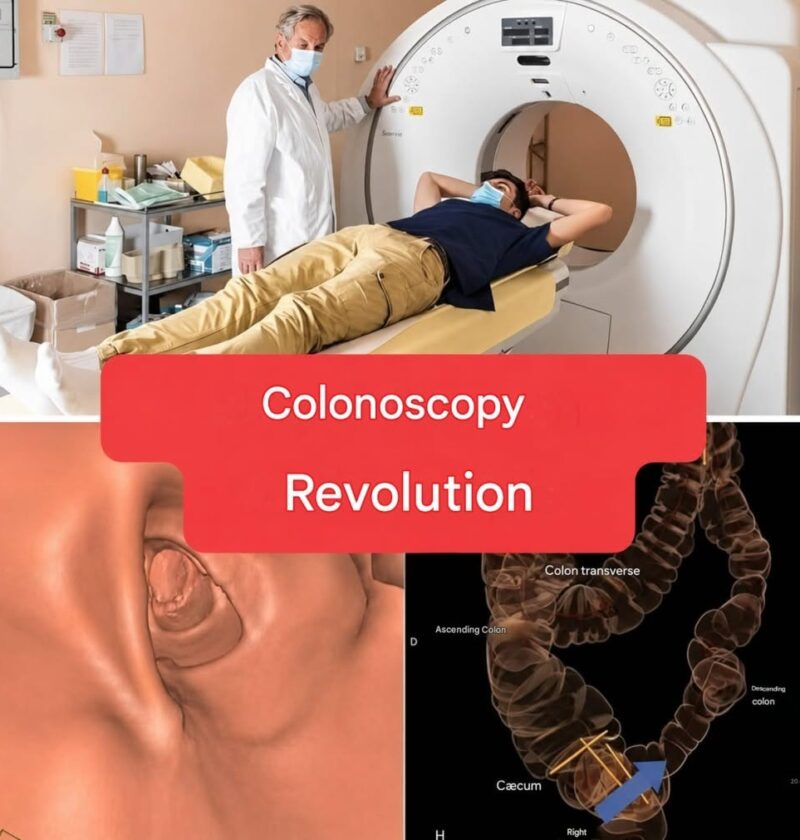
2. CT colonography (“virtual colonoscopy”)
This uses CT imaging to create a view of the colon.
Advantages:
- No insertion of a camera through the entire colon
- Less invasive than traditional colonoscopy
Limitations:
- Still usually requires bowel preparation
- Cannot remove polyps; a follow-up colonoscopy may be needed if abnormalities are found.
3. Capsule endoscopy
A person swallows a small camera capsule that travels through the digestive tract and takes images.
Advantages:
- Avoids a traditional scope
Limitations:
- Availability and use vary
- It may not replace colonoscopy because it cannot always perform biopsies or remove growths.
Why colonoscopy is still widely used
Traditional colonoscopy remains valuable because it can:
- directly examine the colon lining,
- take tissue samples,
- remove precancerous polyps during the same procedure.
Research continues on less invasive screening technologies, but for now, the “end of colonoscopy” has not arrived. The best screening method depends on a person’s age, risk factors, symptoms, and medical history.
If you have the second part of the article (“2/2”), you can share it and I can help evaluate the claims.