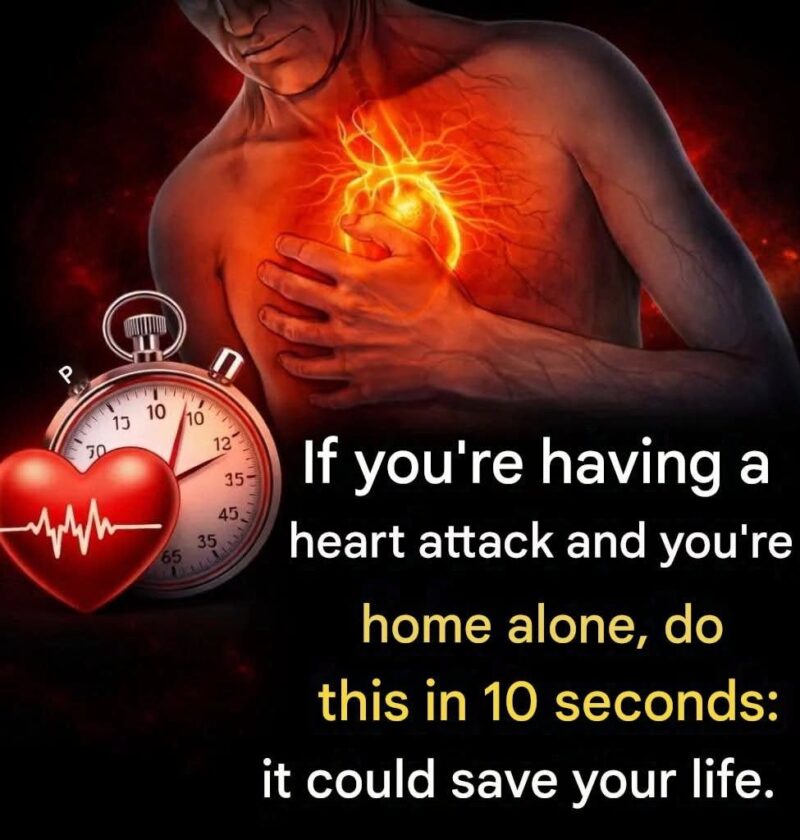
The claim “If you have a heart attack at home, do this in 10 seconds and you can save your life” is misleading. There is no guaranteed 10-second trick that can stop a heart attack. The most important actions are to recognize the symptoms quickly and get emergency help.
If you think you are having a heart attack:
- Call emergency services immediately
- Do not wait to see if symptoms go away.
- If possible, use a speakerphone so you can get help while resting.
- Stop what you are doing and sit or lie down
- Stay as calm as possible and avoid exertion.
- Chew aspirin only if appropriate
- If you are not allergic, have not been told to avoid aspirin, and emergency guidance in your area supports it, chewing an aspirin tablet may help reduce clot formation.
- If unsure, ask the emergency operator.
- Unlock your door if you are alone
- This can help emergency responders reach you.
- Do not drive yourself to the hospital
- Emergency responders can begin care sooner and monitor you.
Common heart attack warning signs
- Pressure, squeezing, fullness, or pain in the chest
- Pain spreading to the arm, jaw, neck, back, or shoulder
- Shortness of breath
- Sweating
- Nausea or vomiting
- Sudden weakness or unusual fatigue
Some people—especially women, older adults, and people with diabetes—may have less typical symptoms.
If someone nearby collapses and is not breathing normally: call emergency services and begin CPR if you know how, using an AED if available.
The “10-second trick” seen in viral posts is not a substitute for emergency treatment. Fast action and calling for help are what save lives.