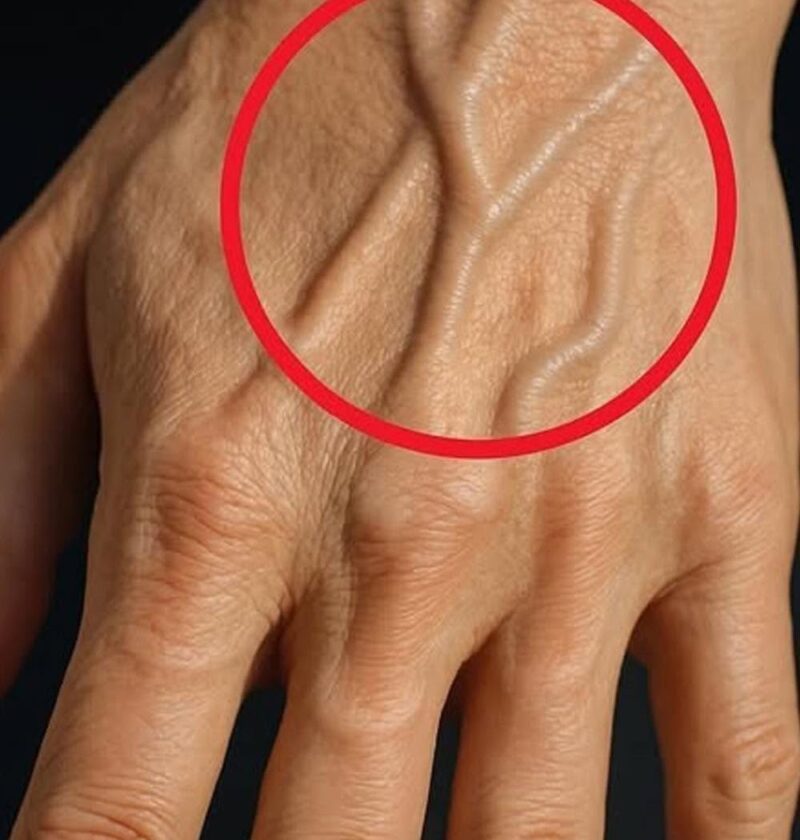
That “If you have visible veins, it means you are…” line is usually clickbait trying to imply something dramatic or diagnostic. In reality, visible veins (vascularity) don’t mean one single thing.
Most commonly, visible veins just mean a combination of normal factors:
1. Lower body fat
When there’s less fat under the skin, veins show more easily—especially in arms and legs. This is the most common reason in fit or athletic people.
2. Genetics
Some people naturally have:
- thinner skin
- more superficial veins
- or veins that sit closer to the surface
So they look more vascular even at higher body fat levels.
3. Muscle size and “pump”
After exercise (especially resistance training), muscles swell slightly with increased blood flow, pushing veins closer to the skin.
4. Temperature
Heat makes veins expand and become more visible. Cold does the opposite.
5. Hydration and sodium balance
Changes in fluid levels can temporarily make veins more or less visible, but this is not a reliable “health indicator.”
What it does NOT mean
Visible veins do not automatically mean:
- you are extremely healthy
- you are dehydrated (a common myth)
- you have low body fat in a “medical” sense
- or anything dangerous is happening
Bottom line
Visible veins are mostly a normal mix of genetics, body composition, and temporary factors. Fitness content online often exaggerates it into a “status signal,” but medically it’s usually not meaningful on its own.
If you want, I can explain how athletes actually track body fat more accurately than vein visibility.