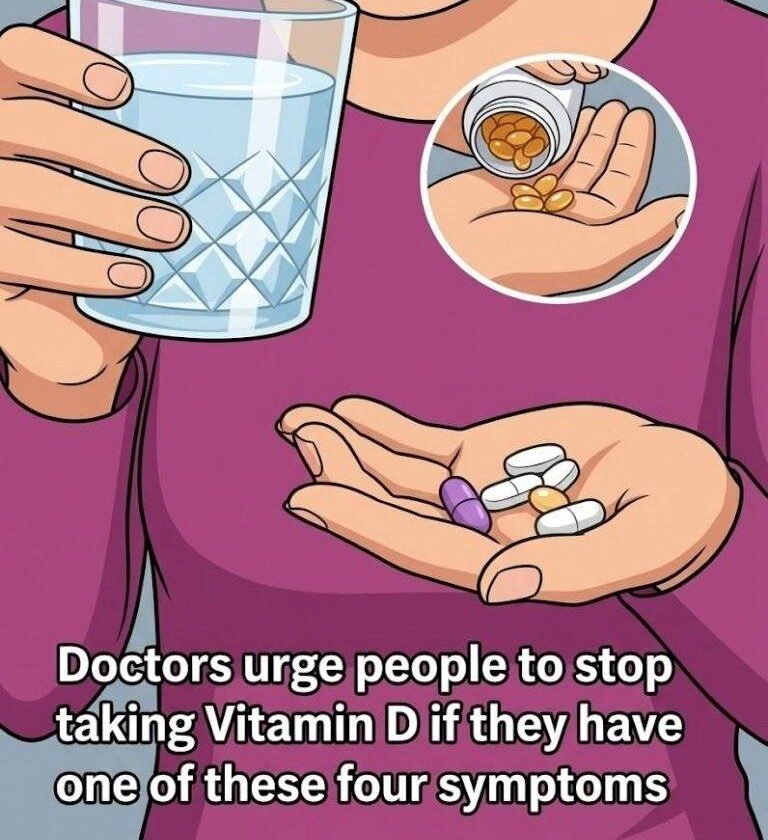
That headline is clickbait-y and oversimplified. There is no general medical rule that everyone should “stop vitamin D immediately” if they notice a few vague symptoms. Vitamin D is safe at normal doses, but problems can happen mainly with excessive long-term intake leading to vitamin D toxicity.
What doctors are actually concerned about is Vitamin D overdose, which can cause Hypercalcemia (too much calcium in the blood). That’s what produces symptoms.
Symptoms that can happen in vitamin D toxicity (usually from high doses over time):
- Persistent nausea or vomiting
- Unusual weakness or fatigue
- Excessive thirst and frequent urination
- Confusion or difficulty thinking clearly
- In some cases, kidney pain or kidney stones
These symptoms are not specific to vitamin D—they can come from many conditions (dehydration, infections, kidney issues, etc.). That’s why self-diagnosing based on a list is risky.
Key point doctors emphasize
You usually don’t need to stop vitamin D just because you feel unwell. Instead:
- Check your dosage (many toxicity cases involve very high supplements)
- Consider a blood test for calcium and vitamin D levels
- Talk to a clinician before making changes
When to actually worry
Risk is higher if someone is taking:
- High-dose supplements for months
- Multiple products containing vitamin D
- Certain medical prescriptions without monitoring
If you want, you can tell me your dose and symptoms, and I can help you judge whether it sounds like normal side effects, deficiency, or something that needs testing.