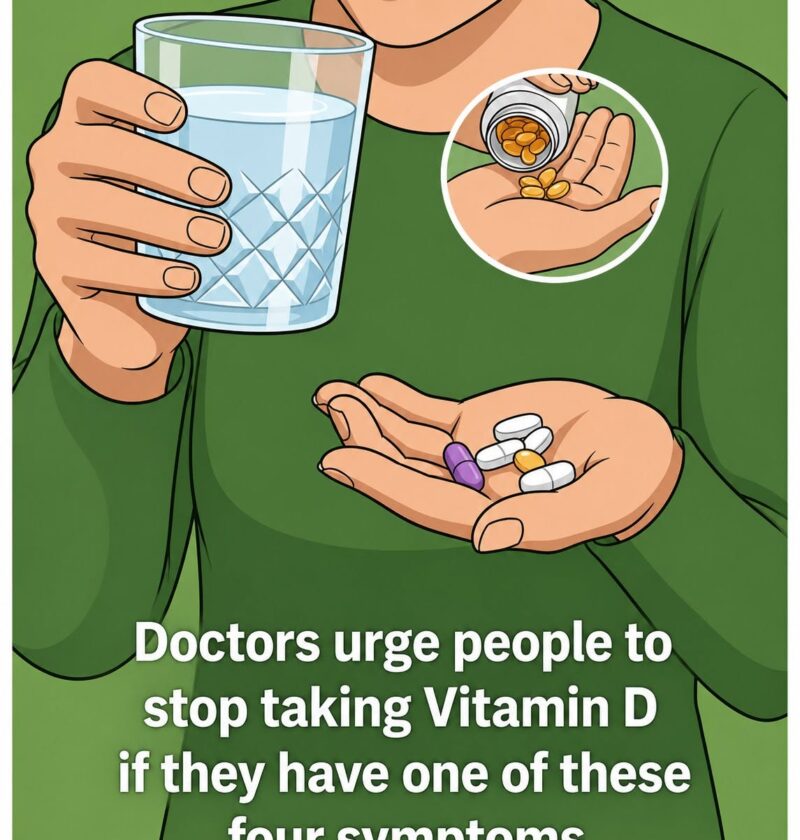
That headline is designed to sound alarming, but it’s misleading without context.
You should not automatically stop vitamin D just because of a list of symptoms. Instead, doctors are usually warning about possible vitamin D overdose, which is uncommon and typically happens only with very high doses over time.
Vitamin D (Vitamin D) can become harmful if it leads to high calcium levels in the blood.
Symptoms that may be linked to too much vitamin D (via high calcium)
If someone is taking excessive doses for weeks or months, possible signs include:
- Nausea or vomiting
- Excessive thirst and frequent urination
- Unusual weakness or fatigue
- Confusion or feeling “foggy”
These are related to hypercalcemia (high calcium levels), not vitamin D itself.
Important reality check
- Vitamin D toxicity is rare
- It usually comes from very high supplement doses, not food or sunlight
- Most people taking normal doses do not experience these problems
Why these posts are misleading
- The “4 symptoms” are non-specific (many conditions can cause them)
- They imply urgency for everyone, even though it only applies to rare overdose cases
- They often ignore dosage, duration, and medical context
What you should do instead
- Follow your prescribed dose or standard daily recommendation
- Avoid stacking multiple supplements containing vitamin D
- Get a blood test if you’re on long-term high-dose supplementation
Bottom line
The real message is not “stop vitamin D immediately,” but:
“Be careful with high-dose vitamin D and watch for signs of overdose if you’re taking large amounts long-term.”
If you want, tell me the dose you’re taking and I can tell you whether it’s within a normal safe range.