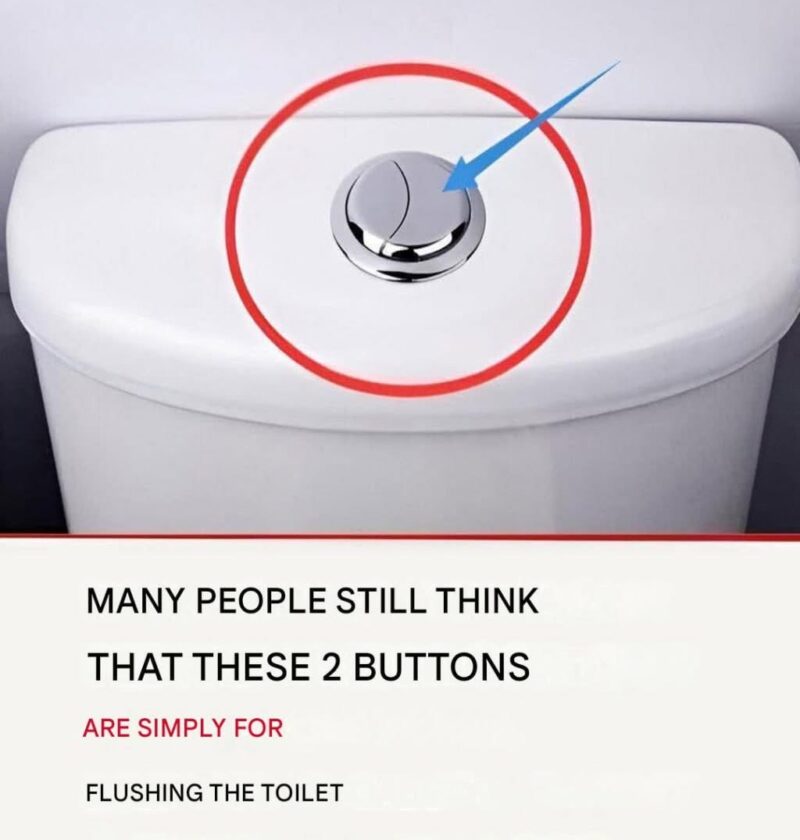
That statement is about dual-flush toilets, and it’s partly true—but often misunderstood.
Most modern toilets have two buttons, and they are not just “random flush options,” they are designed for water saving.
We’re talking about a Dual flush toilet mechanism.
🚽 What the two buttons actually mean
💧 Small button (half flush)
- Used for liquid waste only
- Uses less water (eco-friendly option)
💩 Large button (full flush)
- Used for solid waste
- Uses more water for stronger flushing power
🧠 Why people get confused
Many think:
- Both buttons do the same thing
- One is “backup”
- Or both just increase pressure
But in reality:
👉 They are designed to reduce water usage significantly over time
🌍 Why this system exists
Dual flush systems were introduced to:
- Save water
- Reduce utility bills
- Improve environmental efficiency
A single toilet can save thousands of liters of water per year.
⚠️ Common mistakes
- Using full flush every time (wastes water)
- Pressing both buttons together unnecessarily
- Not maintaining the flush system, causing weak flushing
👍 Bottom line
The two buttons are not just for “strong or weak flush”—they are a water-saving system designed for different types of waste.
If you want, I can explain why some toilets flush weakly and how to fix it without calling a plumber.