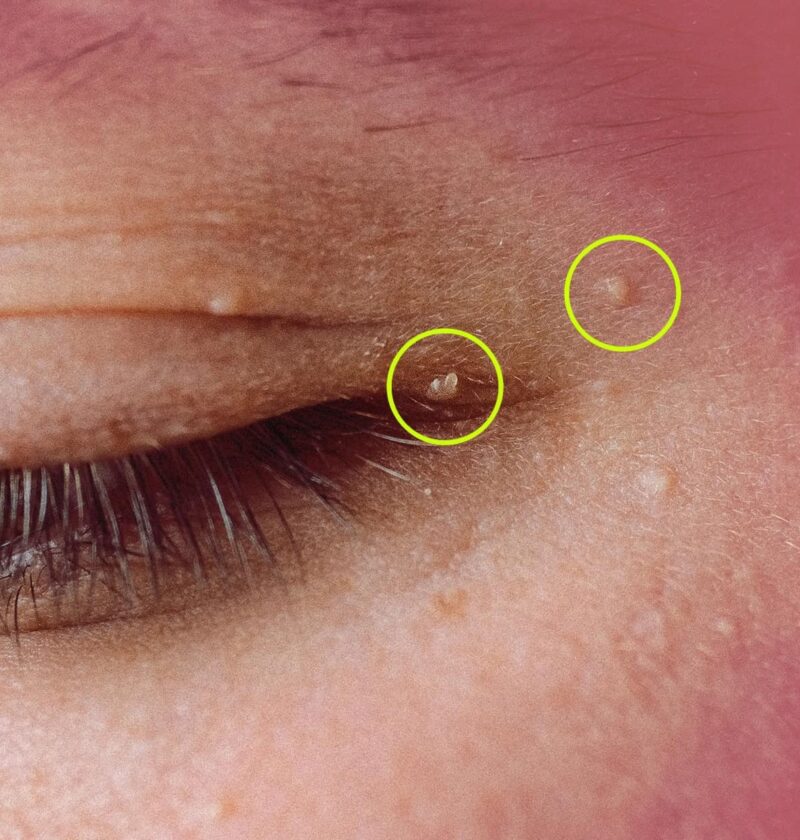
Milia are tiny white or yellowish bumps that form when keratin (a skin protein) gets trapped under the skin. They’re often called “milk spots” or “fat cysts,” though they’re actually small keratin cysts—not acne. They commonly appear around the eyes, cheeks, nose, and forehead.


What Causes Milia?
Common triggers include:
- Heavy or pore-clogging skincare products
- Sun damage
- Skin irritation or injury
- Long-term steroid cream use
- Naturally slow skin exfoliation
Milia can happen to anyone, including babies and adults.
How to Get Rid of Milia
1. Don’t Squeeze Them
Unlike pimples, milia don’t have an opening. Picking or squeezing can cause irritation, scarring, or infection.
2. Use Gentle Exfoliation
Chemical exfoliants can help loosen trapped keratin over time:
- AHAs (glycolic acid, lactic acid)
- BHAs (salicylic acid)
- Mild enzyme exfoliants
Start slowly—especially around the eye area.
3. Try a Retinoid
Retinoids speed up skin cell turnover and may help prevent new milia:
- Adapalene
- Retinol
- Prescription tretinoin
Use only as directed and avoid applying too close to the eyes unless approved by a dermatologist.
4. Avoid Heavy Creams
Switch to lightweight, non-comedogenic skincare products if you’re prone to milia.
5. Professional Removal
A dermatologist or licensed esthetician can safely remove milia using:
- Sterile extraction
- Electrocautery
- Laser treatment
- Chemical peels
Professional extraction is the fastest and safest option for stubborn bumps.
When to See a Dermatologist
Consider seeing a doctor if:
- The bumps persist for months
- They spread rapidly
- They become red or irritated
- You’re unsure whether they’re actually milia
Sometimes milia can resemble other conditions like acne, syringomas, or small cysts.
Prevention Tips
- Exfoliate regularly but gently
- Remove makeup thoroughly
- Use sunscreen daily
- Avoid overly rich eye creams if you’re prone to milia
- Introduce retinoids gradually
If you want, I can also help you:
- tell the difference between milia and acne,
- recommend skincare ingredients/products,
- or explain how dermatologists remove them safely.