Night cramps are real and common, but headlines like “this is why” usually oversimplify a mix of different causes.
🦵 What night cramps actually are
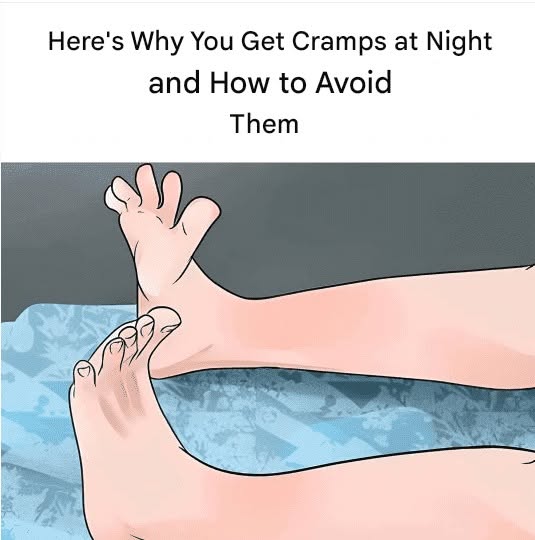
Night cramps are sudden, involuntary muscle contractions—most often in the calves or feet—that happen during sleep or just as you’re falling asleep.
⚡ Common, evidence-based reasons
1) Muscle fatigue or overuse
Standing a lot, walking long distances, or exercise (especially unaccustomed activity) can trigger cramps later at night.
2) Sitting or poor positioning
Long periods with the foot pointed down (like sitting or sleeping with tight bedding) can shorten calf muscles and trigger spasms.
3) Dehydration or electrolyte imbalance
Low fluid intake or imbalances in sodium, potassium, calcium, or magnesium can make muscles more “irritable.”
4) Reduced blood flow or circulation changes
Some people get cramps more easily if circulation is affected by position or vascular issues.
5) Age-related muscle changes
Night cramps become more common with age due to changes in muscle and nerve function.
6) Medications (in some cases)
Certain drugs can contribute, such as:
- diuretics
- some asthma medications
- statins (in some people)
7) Nerve irritation
Conditions affecting nerves (like lumbar spine issues) can trigger nighttime spasms.
8) Pregnancy
Very common in later pregnancy due to fluid shifts and circulation changes.
🧠 Important reality check
- Most night cramps are benign (not dangerous)
- They often have multiple overlapping causes, not just one “hidden reason”
- They are not usually a sign of a serious disease if occasional
🩺 When to get checked
Consider medical advice if:
- cramps are very frequent or severe
- they disturb sleep regularly
- there is swelling, weakness, or numbness
- only one leg is consistently affected
🧊 Simple relief tips
- Stretch calves before bed
- Stay hydrated
- Avoid tight bedding around feet
- Light walking or stretching during a cramp
- Gentle massage or warm compress
If you want, I can show you a quick 2-minute stretch routine that reduces night cramps for many people.