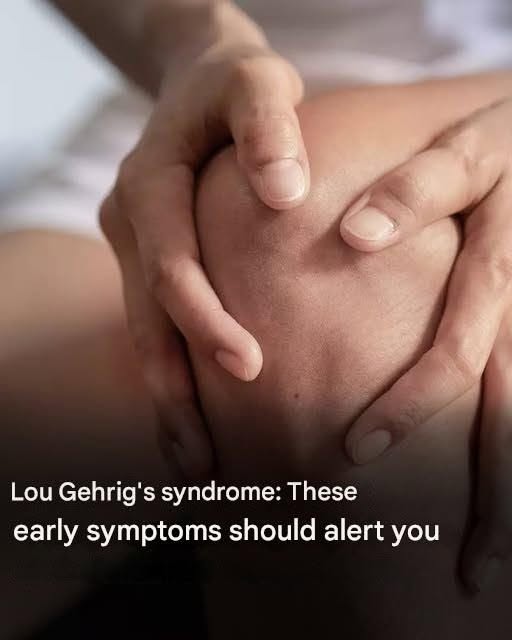
“Lou Gehrig’s syndrome” is another name for Amyotrophic lateral sclerosis (ALS). It is a rare condition that affects nerve cells controlling voluntary muscles.
The phrase “first symptoms” is often used in viral posts, but early signs can vary a lot from person to person.
Early symptoms of ALS may include:
1. Muscle weakness
- Often starts in one hand, arm, or leg
- Difficulty lifting objects or doing fine tasks (buttoning clothes, writing)
2. Muscle twitching (fasciculations)
- Small, involuntary twitches under the skin
3. Stiffness or tight muscles
- Especially in arms or legs
4. Clumsiness or tripping
- Frequent stumbling or difficulty walking steadily
5. Slurred speech (early bulbar symptoms)
- Speech may become unclear or slower
6. Difficulty swallowing (in some cases)
- Feeling like food gets stuck
Important context
- ALS symptoms are usually gradual and progressive
- It is rare, and early symptoms can look like many other, more common conditions (nerve compression, vitamin deficiency, fatigue, etc.)
- There is no single “definite early sign” that confirms ALS
When to seek medical advice
You should see a doctor if you notice:
- Persistent, worsening muscle weakness
- Ongoing twitching with weakness
- Difficulty speaking or swallowing that is getting worse
- Loss of coordination over time
A neurologist typically uses:
- Physical examination
- Nerve conduction studies (EMG)
- Imaging tests to rule out other causes
Bottom line
These posts often sound alarming, but ALS is rare, and most similar symptoms are caused by much more common and treatable conditions.
If you want, I can explain what conditions are often mistaken for ALS (and are usually harmless or treatable).