1. Boiling Water (Best for cracks and paths)
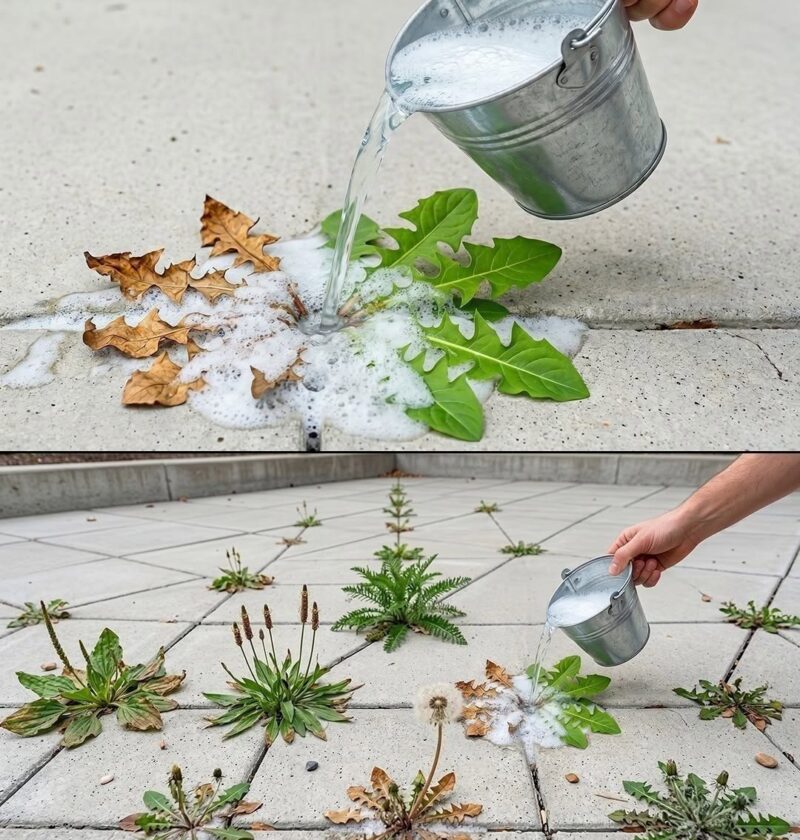
Pour freshly boiled water directly onto weeds. It destroys plant tissues on contact.
Best for: Sidewalk cracks, driveways, gravel paths.
Avoid: Garden beds, as it can harm nearby plant roots.
2. Vinegar Spray
Household white vinegar (5% acetic acid) can burn the leaves of small weeds.
Recipe:
- 1 gallon (3.8 L) white vinegar
- 1 tablespoon liquid dish soap (helps the vinegar stick to leaves)
Spray on a sunny, dry day, coating the leaves thoroughly.
Works best on: Young annual weeds.
Limitations: It usually doesn’t kill deep roots, so perennial weeds may regrow.
3. Hand Weeding After Rain
After rainfall or watering, weeds pull out more easily, including more of the root.
4. Mulch to Prevent Weeds
Apply 2–4 inches (5–10 cm) of mulch around plants to block sunlight and reduce weed growth.
Good mulches include:
- Wood chips
- Straw
- Shredded leaves
- Compost
5. Corn Gluten Meal
This natural byproduct can help prevent weed seeds from germinating when applied before weeds emerge. It won’t kill existing weeds.
What to Avoid
A common homemade recipe combines vinegar, salt, and dish soap. While it may kill weeds, salt can remain in the soil, making it difficult for desirable plants to grow and potentially harming soil health. It’s generally best reserved for places where you never want vegetation, such as cracks in pavement.
For vegetable gardens and flower beds, boiling water, hand weeding, and mulching are usually the safest and most sustainable approaches.