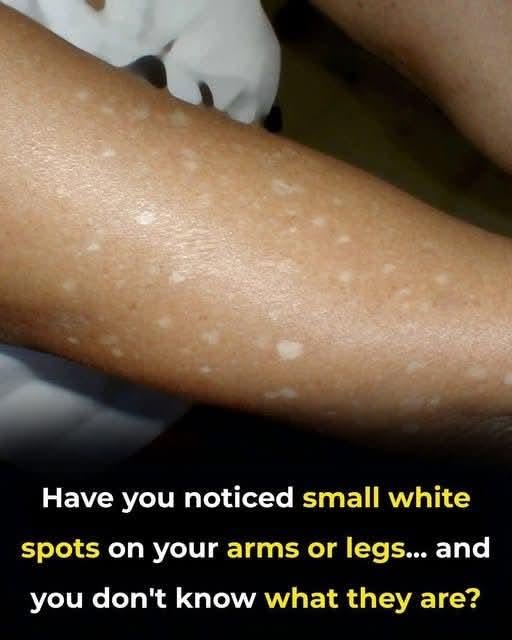
Small white spots on the arms and legs can come from several different skin conditions—some harmless, some that may need treatment. The appearance, texture, and whether they itch or spread are key clues.
Here are the most common causes:
1. Idiopathic guttate hypomelanosis
Very common, especially in adults
- Small (2–5 mm) flat white spots
- Usually on forearms, shins, and legs
- Caused by long-term sun exposure and skin aging
Important:
- Completely harmless
- No treatment needed (cosmetic only)
2. Tinea versicolor
Caused by yeast on the skin
- Light or white patches, sometimes slightly scaly
- More visible after sun exposure
- Often on chest, back, arms
Clues:
- Mild itching or fine scaling
- Patches may slowly spread
Treatment: antifungal creams or shampoos
3. Vitiligo
Pigment loss condition
- Sharply defined white patches
- Can appear anywhere (hands, arms, legs, face)
- Tends to slowly expand over time
Clues:
- Skin looks “milky white”
- Hair in affected area may also turn white
Not dangerous, but may progress
4. Dry skin or post-inflammatory changes
- Small pale spots after eczema, insect bites, or scratches
- Often temporary
- More noticeable in dry weather
5. Sun-related pigment loss
- Uneven tanning can leave small lighter patches
- More obvious in people with darker skin tones
When to get checked by a doctor
You should consider seeing a dermatologist if:
- Spots are spreading or increasing in number
- They are sharply white and expanding
- There is itching, scaling, or discomfort
- You’re unsure whether it’s fungal or pigment loss
Quick summary
- Tiny harmless dots: often aging/sun exposure
- Itchy/scaly patches: possible fungal infection
- Clearly white expanding patches: possible vitiligo