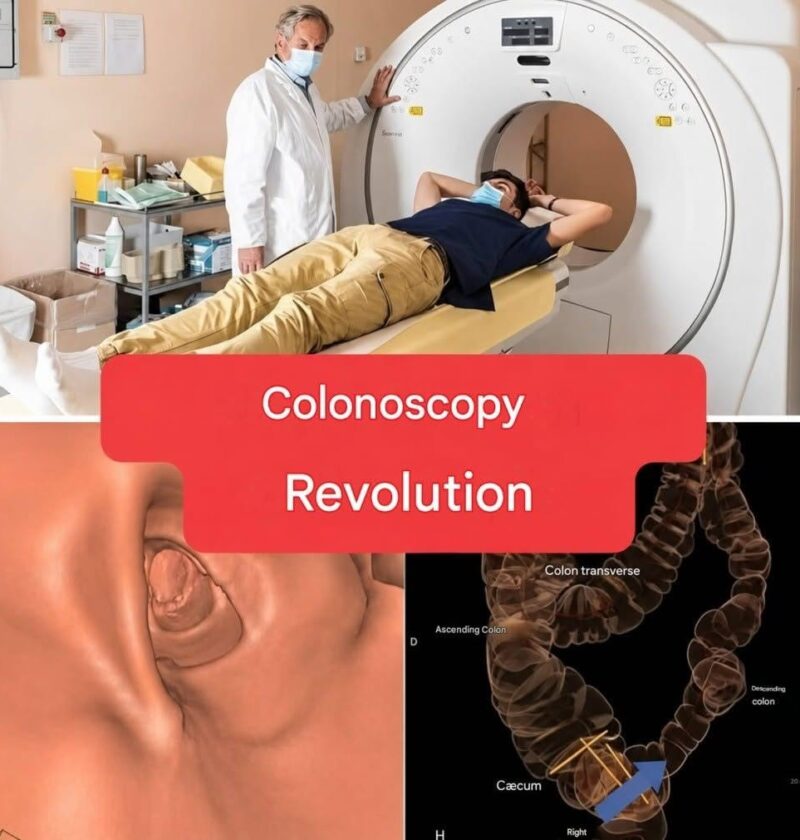
The claim “New method: colonoscopy will no longer be an invasive examination” refers to ongoing efforts to make colorectal cancer screening and bowel examinations less invasive and more comfortable.
Traditional colonoscopy involves:
- A flexible camera inserted through the rectum.
- Bowel preparation (drinking a cleansing solution).
- Often sedation to reduce discomfort.
Newer or alternative approaches being developed or used include:
1. CT colonography (“virtual colonoscopy”)
- Uses a CT scan to create images of the colon.
- Does not require inserting a camera through the entire colon.
- Still usually requires bowel preparation.
- If suspicious polyps are found, a traditional colonoscopy may still be needed for removal or biopsy.
2. Stool-based screening tests
These look for signs of disease in stool samples:
- FIT (fecal immunochemical test): detects hidden blood.
- Stool DNA tests: look for blood and certain genetic changes linked to colorectal cancer.
3. New capsule technologies
Researchers are developing and improving capsule endoscopy, where a person swallows a small camera capsule that travels through the digestive tract. Some systems can examine parts of the colon, but availability and effectiveness vary, and they are not a complete replacement for standard colonoscopy in all situations.
So, while medical technology is moving toward less invasive screening options, colonoscopy remains an important and highly effective test, especially because it can detect and remove precancerous polyps during the same procedure.