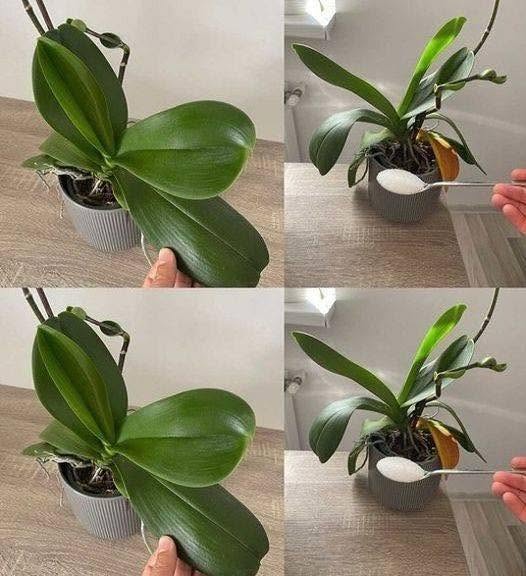
That claim is another gardening myth.
There is no “1 tablespoon magic fertilizer” that makes orchids bloom nonstop. Orchids are slow, cycle-based plants, and their flowering depends on overall care—not a single ingredient.
What orchids actually need to bloom
Orchids (especially Phalaenopsis orchid) bloom based on:
- Light: Bright, indirect light (too little = no flowers)
- Watering: Usually once every 7–10 days (depends on humidity)
- Air roots health: Orchids need airflow, not soggy soil
- Temperature change: Slight drop at night often triggers blooming
- Balanced fertilizer (not overused): Weak, diluted feeding during growth season
Why “1 tablespoon fertilizer” is misleading
People online often promote things like:
- banana water
- rice water
- coffee water
- sugar or yeast mixtures
These may add nutrients, but:
- orchids absorb nutrients very slowly
- too much fertilizer burns roots
- “non-stop blooming” is biologically unrealistic
Real fertilizer rule (important)
Orchids prefer:
- Very diluted fertilizer (¼ strength or less)
- applied every 2–4 weeks during growth
- and flushed with plain water regularly
Reality about orchid blooming
- Orchids bloom in cycles
- Flowers last weeks to months, then they rest
- A healthy plant may bloom 1–2 times per year, not continuously
Bottom line
There is no shortcut fertilizer that forces nonstop blooming. The real secret is light, patience, and gentle feeding—not a spoonful of anything.
If you want, I can give you a simple routine to make an orchid rebloom faster at home.