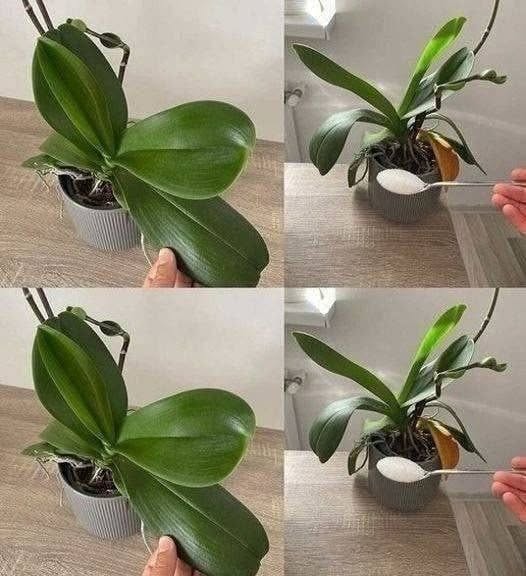
That claim is misleading. Orchids don’t “bloom continuously” just because you add “one tablespoon” of anything. Flowering in orchids depends on light, temperature changes, watering routine, root health, and correct feeding balance, not a single miracle dose.
Let’s break it down properly.
🌸 What orchids actually need to bloom
Orchids like Orchidaceae (especially Phalaenopsis orchids) flower when conditions are right:
- ☀️ Bright, indirect light
- 🌡️ A small temperature drop at night (triggers blooming)
- 💧 Proper watering (not overwatering)
- 🌬️ Good airflow around roots
- 🌱 Balanced fertilizer in small doses
🧪 About the “1 tablespoon fertilizer trick”
These viral tips usually refer to homemade or commercial liquid fertilizers, but:
❌ Why it’s misleading:
- Orchids are light feeders (too much fertilizer burns roots)
- “One tablespoon” is not a universal safe dose
- Over-fertilizing leads to:
- yellow leaves
- root rot
- no flowering at all
🌿 What actually works for feeding orchids
Experts usually recommend:
- A diluted balanced fertilizer (like 20-20-20 or orchid-specific feed)
- “Weak weekly” rule: feed at ¼ to ½ strength
- Flush with plain water occasionally to remove salt buildup
🌼 Why orchids stop blooming (real reasons)
If an orchid isn’t flowering, it’s usually due to:
- Not enough light
- No temperature difference between day and night
- Overwatering
- Old flower spike (needs pruning cycle)
- Root stress or poor potting mix
🧠 Bottom line
There is no magic tablespoon fertilizer that guarantees continuous blooming. Healthy orchids bloom when their environment mimics natural seasonal changes.
If you want, I can give you a simple step-by-step orchid blooming guide used by professional growers in warm climates like Pakistan—it’s much more reliable than viral hacks.