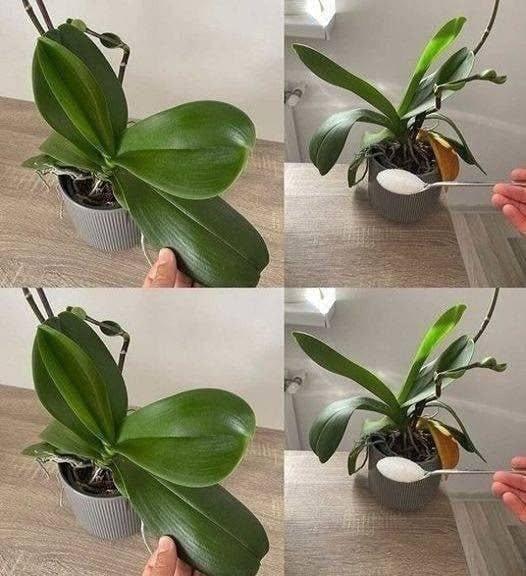
That claim is another viral gardening exaggeration.
Orchids don’t have a “one tablespoon miracle fertilizer” that makes them bloom continuously. What they actually need is balanced care + correct feeding timing, not a strong dose of any single homemade mix.
🌸 What orchids really need to bloom
Orchids (like Phalaenopsis orchid, the common moth orchid) bloom based on:
- light (bright, indirect)
- temperature changes (slight night drop helps)
- healthy roots
- proper watering cycle
- gentle fertilizing
Not a single “power dose” trick.
🧪 About the “1 tablespoon fertilizer trick”
These viral recipes usually involve:
- sugar water
- coffee
- rice water
- milk
- banana peel water
- or diluted fertilizer in large amounts
❌ The problem:
- Can cause root rot
- Encourages fungus and bacteria
- Can damage orchid roots (they are very sensitive)
- Leads to leaf growth but fewer flowers, not more blooms
🌿 What actually works (safe orchid feeding)
✔ Light fertilizer routine
- Use a balanced orchid fertilizer (like 20-20-20)
- Dilute to ¼ strength
- Apply:
- every 2–4 weeks during growth season
- pause during rest periods
✔ Watering method
- Water thoroughly, then let it drain completely
- Never let roots sit in water
✔ Bloom trigger (important)
To encourage flowering:
- give slightly cooler nights (around 5°C difference)
- ensure bright indirect light
- reduce fertilizer slightly before bloom cycle
🧠 Bottom line
There is no single tablespoon “super fertilizer” that guarantees continuous blooming. Orchids bloom when their environment is right, not when they’re overloaded with nutrients.
If you want, I can show you a simple monthly orchid care schedule that actually increases blooming reliably—no viral hacks needed.