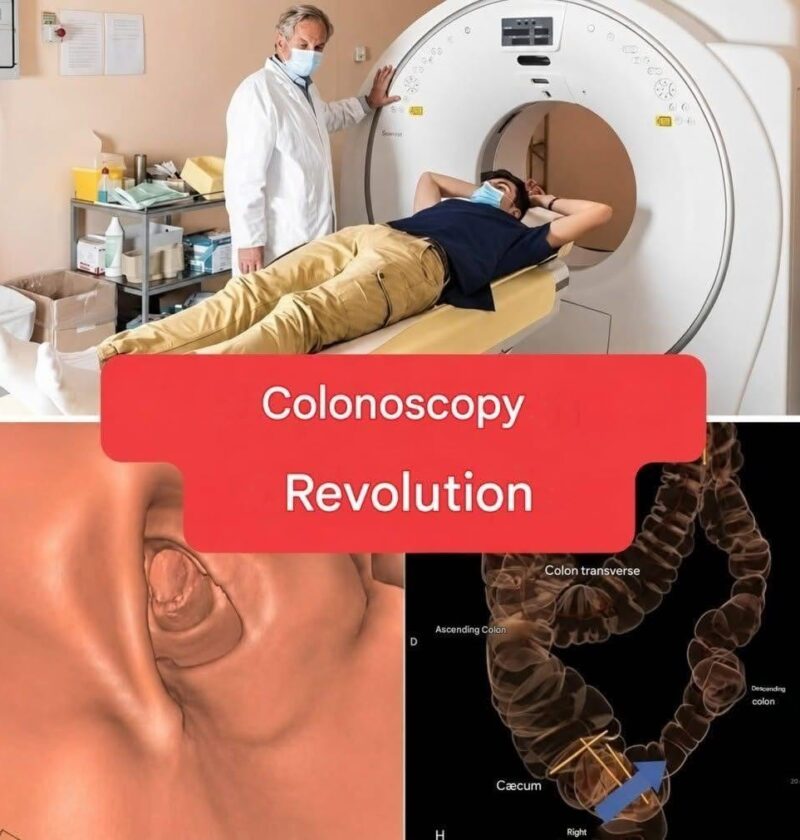
The headline “New method: colonoscopy will no longer be an invasive examination” is an oversimplification. While new screening methods are making colorectal cancer screening easier for some people, traditional colonoscopy has not been replaced.
What a traditional colonoscopy does
A colonoscopy uses a flexible camera to examine the inside of the colon. It is still considered the gold standard because it can:
- Detect polyps and colorectal cancer.
- Remove many polyps during the same procedure.
- Take biopsies of suspicious areas.
Newer, less invasive options
1. Stool-based tests
- These detect hidden blood or DNA changes linked to colorectal cancer.
- They can be done at home.
- If the result is abnormal, a colonoscopy is usually needed.
2. CT colonography (“virtual colonoscopy”)
- Uses CT scans to create images of the colon.
- No scope is passed through the entire colon, but bowel preparation is still required.
- Suspicious findings still require a standard colonoscopy for confirmation or treatment.
3. Capsule endoscopy
- In selected situations, a person swallows a small camera capsule that takes pictures as it travels through the digestive tract.
- It is not a routine replacement for colonoscopy and cannot remove polyps or perform biopsies.
Bottom line
Less invasive screening methods are expanding and may be appropriate for some people, especially those at average risk. However, traditional colonoscopy remains the most comprehensive test because it can both diagnose and treat problems during the same procedure.
If you have the second half of the article (“2/2”), share it and I can explain whether the specific “new method” is supported by medical evidence.