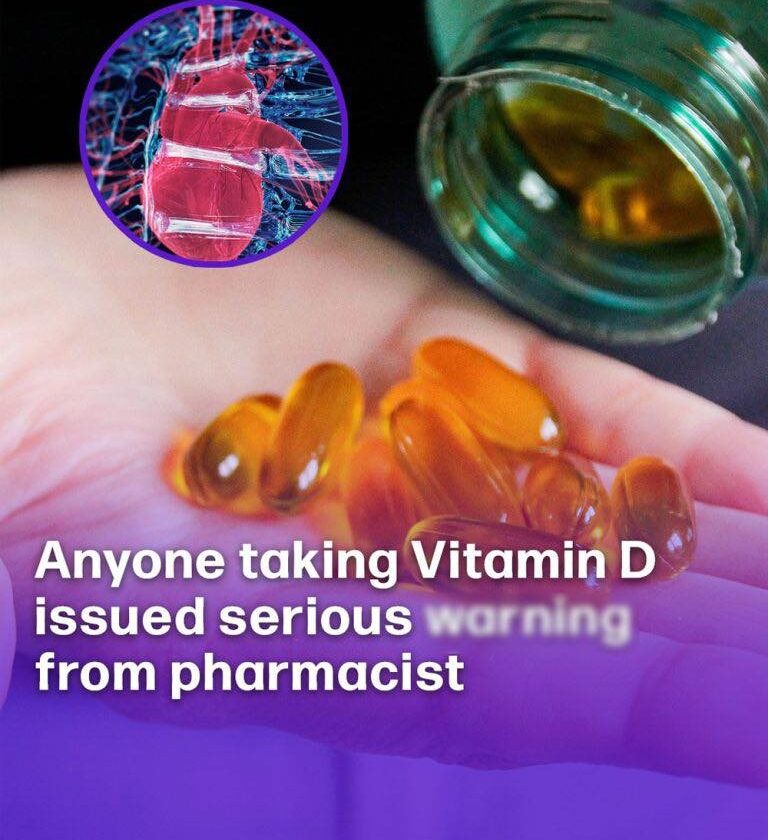
A pharmacist warning about Vitamin D is usually not saying people should stop taking it altogether. The main concern is taking too much for too long, especially with high-dose supplements.
Key points experts and pharmacists are warning about:
- Vitamin D is fat-soluble, so excess amounts can build up in the body.
- Very high doses over time may cause hypercalcemia (too much calcium in the blood), which can damage the kidneys, heart, and bones. (Tyla)
- Standard doses such as 600–2,000 IU daily are generally considered safe for most adults, but megadoses should only be taken under medical supervision. (Home Remedies Easy)
- The commonly cited upper safe limit for adults is about:
4000\ \text{IU/day}
according to NHS-linked guidance mentioned in reports. (Tyla)
Symptoms of Vitamin D overdose can include:
- Nausea or vomiting
- Weakness and fatigue
- Frequent urination
- Kidney stones
- Confusion or irregular heartbeat in severe cases (Home Remedies Easy)
Pharmacists also warn that Vitamin D can interact with some medications, including:
- Thiazide diuretics
- Steroids
- Digoxin
- Orlistat and some cholesterol medications (EatingWell)
At the same time, deficiency is very common, and Vitamin D remains important for:
- Bone health
- Immune function
- Muscle strength
- Mood regulation (Home Remedies Easy)
The practical advice from healthcare professionals is:
- Get a blood test if possible.
- Avoid randomly taking very high doses.
- Take Vitamin D with food containing fat for better absorption.
- Speak with a doctor or pharmacist if you have kidney disease or take regular medications. (Home Remedies Easy)