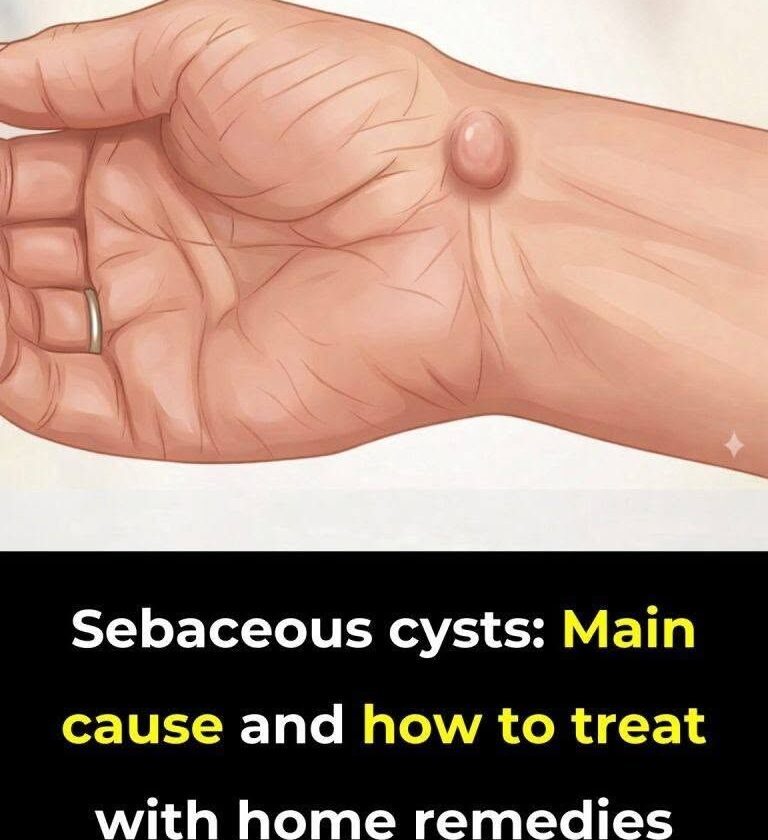
A sebaceous cyst (more accurately called an epidermoid cyst) is a slow-growing, harmless lump that forms under the skin when a hair follicle or oil gland becomes blocked.
🧴 What is a sebaceous cyst?
It is a small, round, closed sac under the skin filled with:
- Keratin (a soft, cheese-like protein)
- Dead skin cells
- Oil-like material
It often feels:
- Smooth or firm
- Movable under the skin
- Painless (unless infected)
🧠 Main causes
Sebaceous/epidermoid cysts usually form due to:
- Blocked hair follicle or skin pore
Dead skin cells get trapped instead of shedding normally. - Skin injury or irritation
Cuts, acne, or repeated friction can trigger cyst formation. - Hormonal changes
Can increase oil production in the skin. - Genetic tendency
Some people naturally develop more cysts. - Acne-prone skin
Increased oil and blocked pores raise risk.
⚠️ When a cyst becomes a problem
A cyst may need attention if it becomes:
- Red, swollen, or painful
- Warm to touch
- Filled with pus (infection)
- Rapidly growing
- Repeatedly returning
🏠 Safe home care (what you can do)
1. Warm compress
- Apply warm cloth for 10–15 minutes, 2–3 times daily
- Helps reduce swelling and may encourage natural drainage
2. Keep the area clean
- Wash gently with mild soap
- Avoid harsh scrubbing
3. Don’t squeeze or pop it
- This is very important
- Squeezing can cause infection or deeper inflammation
4. Pain relief (if needed)
- Over-the-counter pain relievers may help if it is tender (use only as directed)
5. Avoid irritation
- Don’t wear tight clothing over the area
- Avoid friction or repeated touching
🩺 Medical treatment (when needed)
Doctors may:
- Drain it safely (if infected)
- Remove it completely with minor surgery (best permanent solution)
- Prescribe antibiotics if infection is present
🚨 Seek medical help if:
- It becomes painful or red
- You notice pus or bad smell
- It grows quickly
- It keeps coming back in the same place
Key takeaway
Most sebaceous cysts are harmless and slow-growing, but they don’t fully disappear with home remedies. Warm compresses can help symptoms, but removal by a doctor is the only permanent cure.
If you want, I can also explain how to tell the difference between a cyst, lipoma, and boil—they often look similar but behave differently.