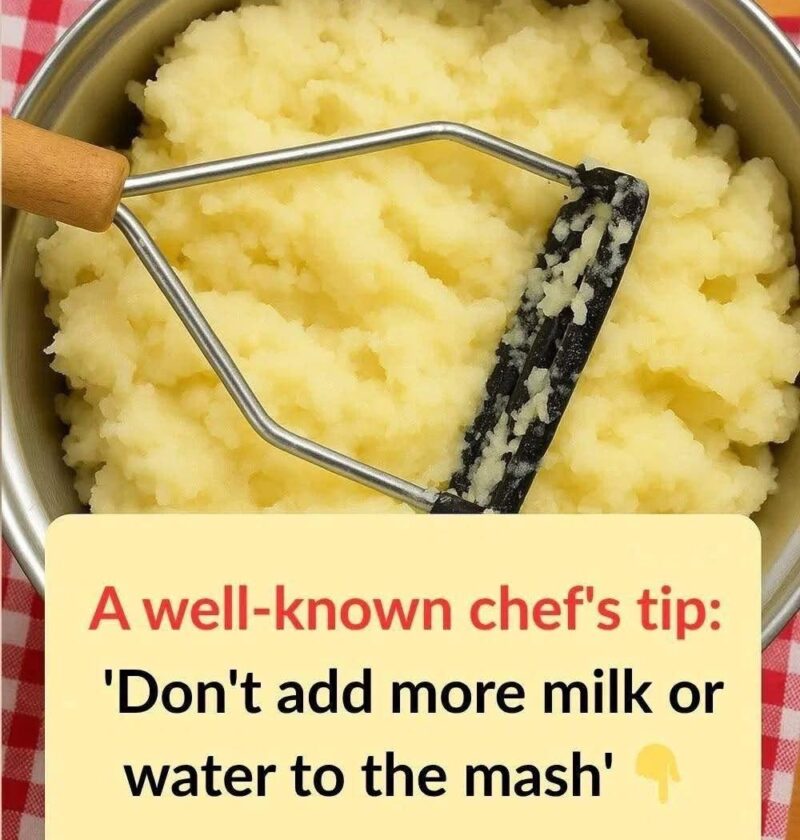
That’s another absolute-style food claim that’s a bit misleading.
You don’t need to “stop” adding milk or water to mashed potatoes—in fact, both can be useful. The real key is how and when you add liquid, not avoiding it entirely.
🥔 What actually makes mashed potatoes good
1. Milk is traditional for creaminess
Adding warm milk to potatoes:
- Makes them smooth and creamy
- Adds richness and flavor
- Helps prevent a gluey texture when used correctly
This is standard in many classic recipes, including mashed potatoes.
2. Water is not “wrong” — but it matters how it’s used
Water is commonly used:
- To boil potatoes (then drained)
- To adjust texture if needed
But adding too much water at the end can make potatoes:
- Watery
- Bland
- Thin instead of creamy
3. The real secret: starch control
The biggest factor in mashed potato texture is:
- Overworking potatoes → gluey mash
- Undercooking or overboiling → grainy mash
🧠 Better way to get perfect mashed potatoes
- Use starchy potatoes (like Russet or Yukon Gold)
- Boil in salted water until fork-tender
- Drain well and let steam dry for 1–2 minutes
- Mash while hot
- Add warm milk and butter gradually
- Season properly
🧈 What actually improves texture (more than avoiding milk/water)
- Butter (key for richness)
- Warm dairy (cold milk cools and stiffens potatoes)
- Proper mashing tool (ricer = best texture)
🚫 Myth vs reality
- Myth: “Milk or water ruins mashed potatoes”
- Reality: Poor technique ruins mashed potatoes—not the liquid itself