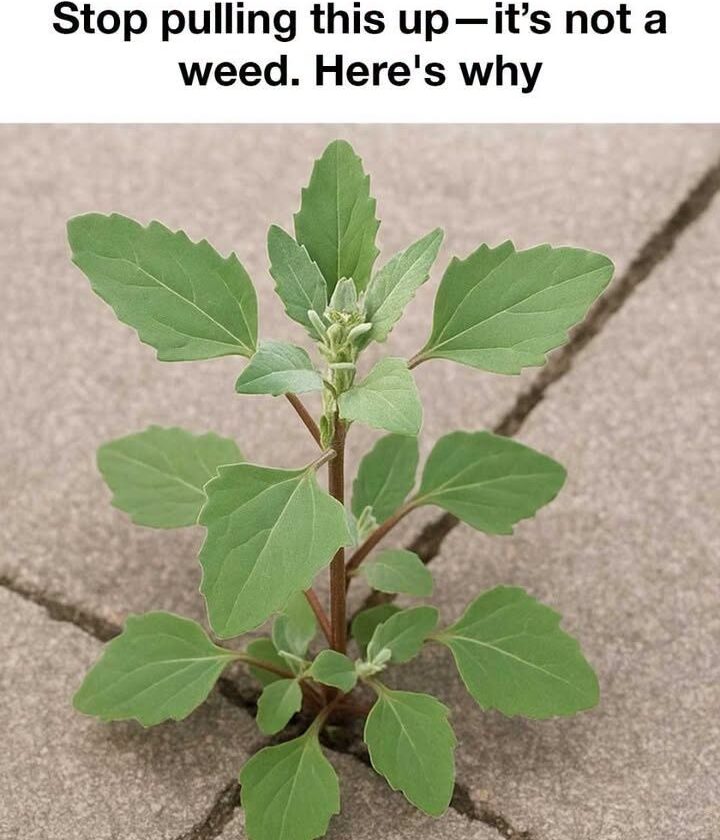
That line is another clickbait gardening headline. It’s usually used to trick people into clicking, and the “it’s not a weed” part is almost always misleading.
In real gardening terms, a “weed” isn’t a specific plant species—it’s any plant growing where you don’t want it. So whether something is a weed depends on context, not identity.
🌱 What the article is usually trying to say
Headlines like this often refer to:
- Wild plants that people mistakenly remove (like beneficial ground cover)
- Native plants that support pollinators
- Or plants that look “messy” but aren’t harmful
So the claim “stop pulling this—it’s not a weed” usually means:
👉 “You might be removing a plant that is actually useful.”
🌼 Examples of “misidentified weeds”
Some commonly misunderstood plants:
- Clover (helps fix nitrogen in soil)
- Dandelions (support pollinators, edible leaves)
- Chickweed (edible and soil-covering)
- Certain native grasses or herbs
But context matters—these can still be unwanted in lawns or paths.
⚖️ The key truth
There is no universal rule:
- In a wild garden → it may be beneficial
- In a lawn or driveway → it may be a weed
So the same plant can be both “useful” and “unwanted.”
🧠 Bottom line
The headline is trying to sound dramatic. The real message is:
👉 Not every “wild plant” is harmful
👉 But whether you keep or remove it depends on your goal for the space
If you want, you can share a picture or description of the plant you’re dealing with, and I can tell you whether it’s actually beneficial or a true weed in your situation.