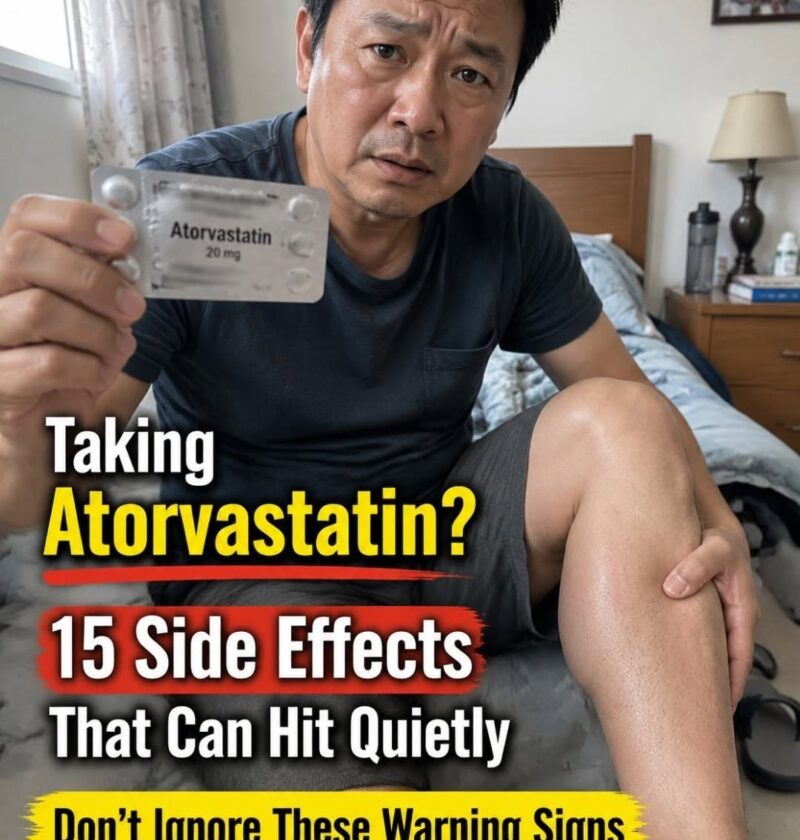
Taking Atorvastatin? 15 Subtle Side Effects to Know About
Atorvastatin is a statin medication used to lower LDL (“bad”) cholesterol and reduce the risk of heart attack and stroke. Many people take it without problems, but some people experience side effects that can be easy to overlook.
1. Muscle aches or soreness
- One of the most commonly reported concerns.
- May feel like unexplained stiffness, tenderness, or weakness.
2. Unusual muscle weakness
- Difficulty doing normal activities, climbing stairs, or lifting objects may need medical attention.
3. Fatigue or low energy
- Some people report feeling more tired after starting a statin, although fatigue can have many causes.
4. Headache
- Mild headaches can occur in some people.
5. Digestive changes
- Nausea, diarrhea, constipation, or stomach discomfort may occur.
6. Sleep changes
- Some people report insomnia or changes in sleep patterns.
7. Dizziness
- Feeling lightheaded can occur, though it is not among the most common effects.
8. Memory or concentration concerns
- Rare reports include temporary memory issues or difficulty concentrating. These symptoms usually improve after stopping the medication under medical guidance.
9. Increased blood sugar levels
- Statins can slightly raise blood glucose in some people, especially those already at risk for diabetes.
10. Joint discomfort
- Some people notice aches that may be mistaken for normal aging or exercise-related pain.
11. Liver enzyme changes
- Atorvastatin can affect liver enzymes, which is why doctors may monitor liver health in certain situations.
12. Muscle cramps
- Cramping or tightness may occur in some users.
13. Skin reactions
- Rash, itching, or allergic reactions are uncommon but possible.
14. Reduced appetite or changes in taste
- Less common digestive-related effects may occur.
15. Severe muscle pain with dark urine (rare but urgent)
- A rare condition called rhabdomyolysis involves serious muscle breakdown.
- Seek medical help if you develop severe muscle pain, marked weakness, or dark-colored urine.
Important:
- Do not stop atorvastatin suddenly without talking to your healthcare professional. Stopping it may increase cardiovascular risk for people who need cholesterol control.
- Tell your doctor about new muscle symptoms, especially if they are severe or worsening.
- Some medicines, supplements, and grapefruit products can interact with certain statins (though the interaction varies by statin and amount consumed).
If you take atorvastatin, sharing your dose (for example 10 mg, 20 mg, 40 mg, or 80 mg), how long you’ve been taking it, and the symptoms you’ve noticed can help identify whether they may be related.