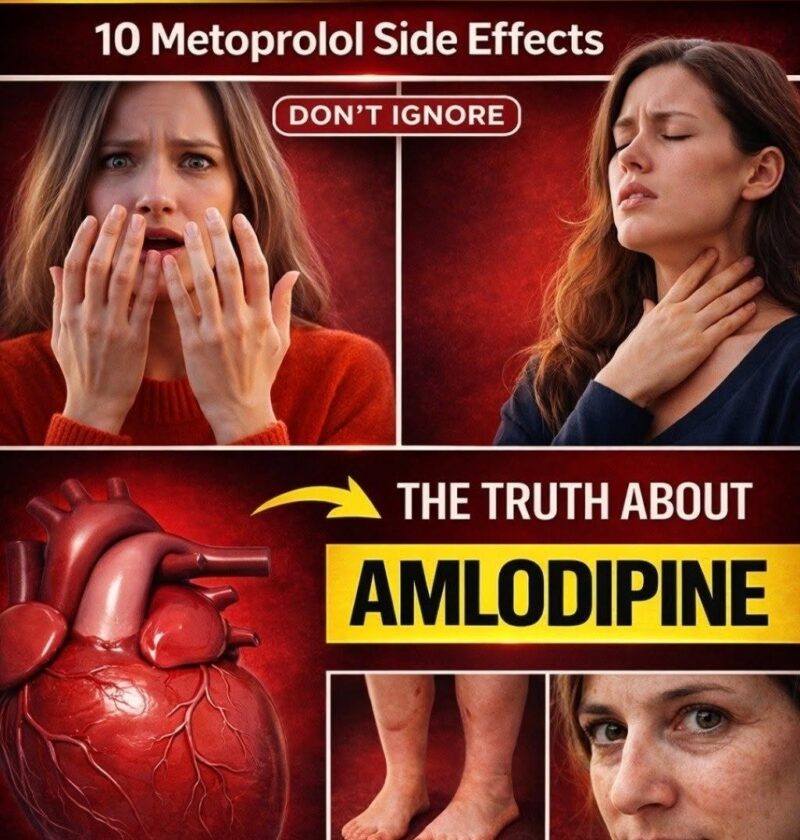
That headline is clickbait. Doctors are not “praying you don’t discover” side effects—they’re expected to know and discuss them when prescribing.
Metoprolol is a widely used beta-blocker for high blood pressure, chest pain, heart rhythm issues, and heart failure. Most people tolerate it well, but like all medicines, it can cause side effects.
⚠️ Common side effects
These are the ones most frequently reported:
- Fatigue / tiredness
- Dizziness or lightheadedness
- Slow heart rate (bradycardia)
- Cold hands and feet
- Reduced exercise tolerance
- Sleep disturbances or vivid dreams
- Mild nausea or stomach upset
- Mood changes (occasionally low mood)
- Sexual dysfunction (in some people)
- Shortness of breath (rare, more likely in asthma/COPD)
🚨 Important (but less common) risks
Seek medical attention if you notice:
- fainting or severe dizziness
- very slow pulse with weakness
- worsening shortness of breath or wheezing
- swelling of face/lips (allergic reaction)
⚠️ Key safety warning
Do not stop metoprolol suddenly. Abrupt withdrawal can lead to:
- chest pain
- dangerous heart rhythm changes
- increased risk of heart attack in some patients
Any changes should be guided by a clinician.
🧠 Bottom line
Metoprolol has real but generally manageable side effects. It is widely used because, for many patients, the heart protection benefits outweigh the risks. Viral posts often exaggerate normal, well-known side effects to create fear.
If you want, I can break down:
- who should avoid metoprolol
- or how to tell if symptoms are from the drug vs your condition
- or safer alternatives in certain cases