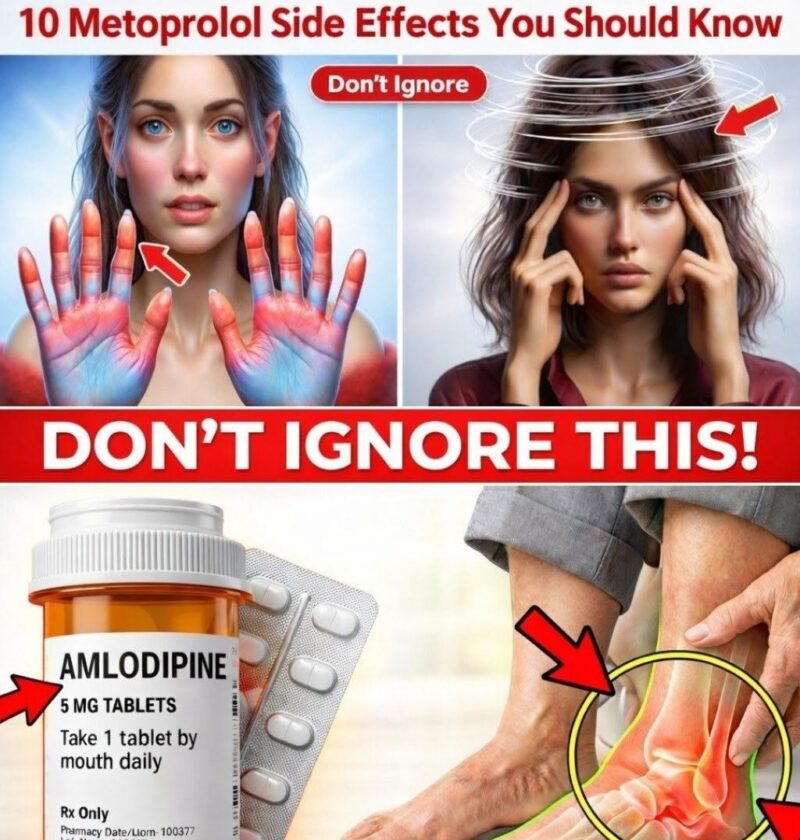
That headline is clickbait. The phrase “Your doctor is PRAYING You Don’t Discover” is meant to provoke curiosity and distrust. In reality, healthcare professionals are expected to discuss the benefits, risks, and common side effects of medications they prescribe.
For Metoprolol, the side effects are well known and documented. They can include:
- Fatigue or unusual tiredness.
- Dizziness or lightheadedness, especially when standing up.
- Slow heart rate.
- Low blood pressure.
- Cold hands and feet.
- Shortness of breath or wheezing (more likely in susceptible individuals).
- Nausea, diarrhea, or other mild digestive symptoms.
- Sleep disturbances or vivid dreams.
- Sexual dysfunction in some people.
- Depression or mood changes in some individuals, although the evidence for a direct cause is mixed.
Some less common but more serious side effects include:
- Fainting.
- A very slow heartbeat.
- Worsening symptoms of Heart Failure, such as increasing shortness of breath or swelling in the legs.
- Severe allergic reactions.
It’s also important to know that stopping metoprolol abruptly can be dangerous, particularly in people with heart disease. It should usually be reduced gradually under medical supervision.
The key point is that every medication involves balancing benefits and risks. For many people, metoprolol substantially lowers the risk of serious cardiovascular problems, and most side effects are mild or manageable.
If you’re taking metoprolol and are concerned about side effects, it’s best to discuss them with your prescribing clinician rather than stopping the medication on your own.