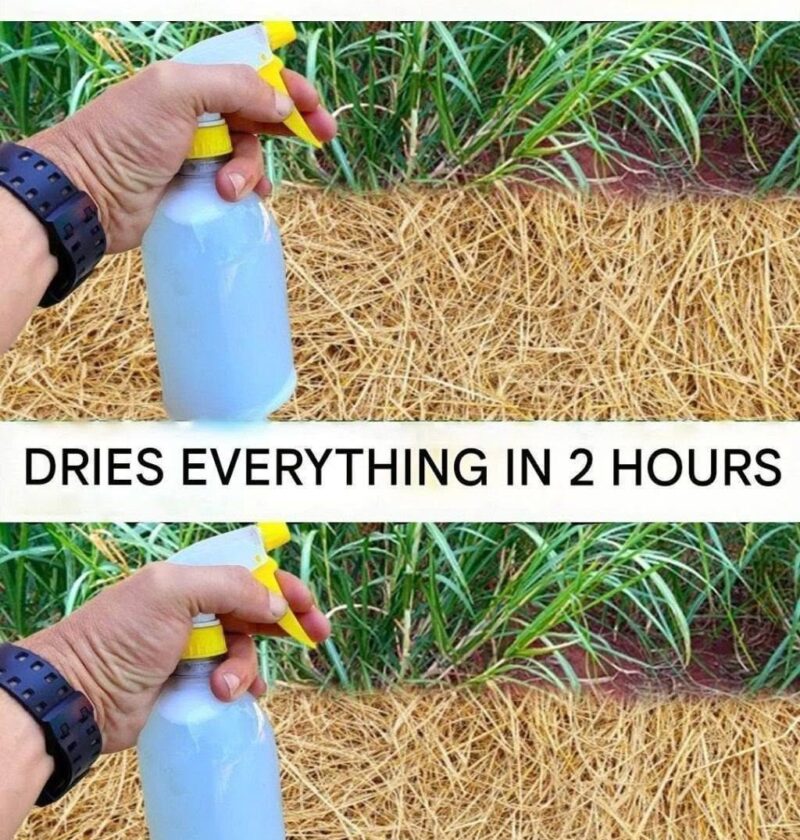
Headlines like “The best homemade weed killer: no poison (dries everything in 2 hours)” are usually exaggerated. A homemade solution may cause weeds to wilt quickly, but there is no homemade spray that reliably kills all weeds permanently within two hours.
Here are some common non-synthetic options and what they can realistically do:
1. Boiling water
- Pour directly onto weeds growing in sidewalk cracks, gravel, or driveways.
- It can quickly kill the above-ground parts and may kill the roots of small annual weeds.
- Avoid using it near desirable plants.
2. Vinegar
- Household white vinegar (about 5% acetic acid) can burn the leaves of young weeds, especially on warm, sunny days.
- It is most effective on small, annual weeds.
- Established perennial weeds often regrow because the roots survive.
3. Hand pulling
- Removing the entire root is one of the most effective chemical-free methods, especially after rain when the soil is soft.
4. Mulch
- Applying 2–4 inches (5–10 cm) of organic mulch around plants blocks sunlight and helps prevent new weeds from sprouting.
Be cautious with salt
Many online recipes recommend mixing vinegar, salt, and dish soap. While salt can kill plants, it also:
- Persists in the soil.
- Can prevent future plants from growing.
- May damage nearby vegetation and soil health.
For those reasons, salt is generally not recommended for garden beds or lawns.
The bottom line
No homemade weed killer can honestly promise to “dry everything in 2 hours” and ensure weeds “never come back.” For long-term control, the most effective approach is to:
- Remove weeds before they set seed.
- Pull or dig out deep-rooted weeds.
- Use mulch to suppress new growth.
- Repeat treatment as needed.
If you tell me where the weeds are (lawn, vegetable garden, flower bed, gravel driveway, patio, or sidewalk cracks), I can suggest the safest and most effective method for that situation.