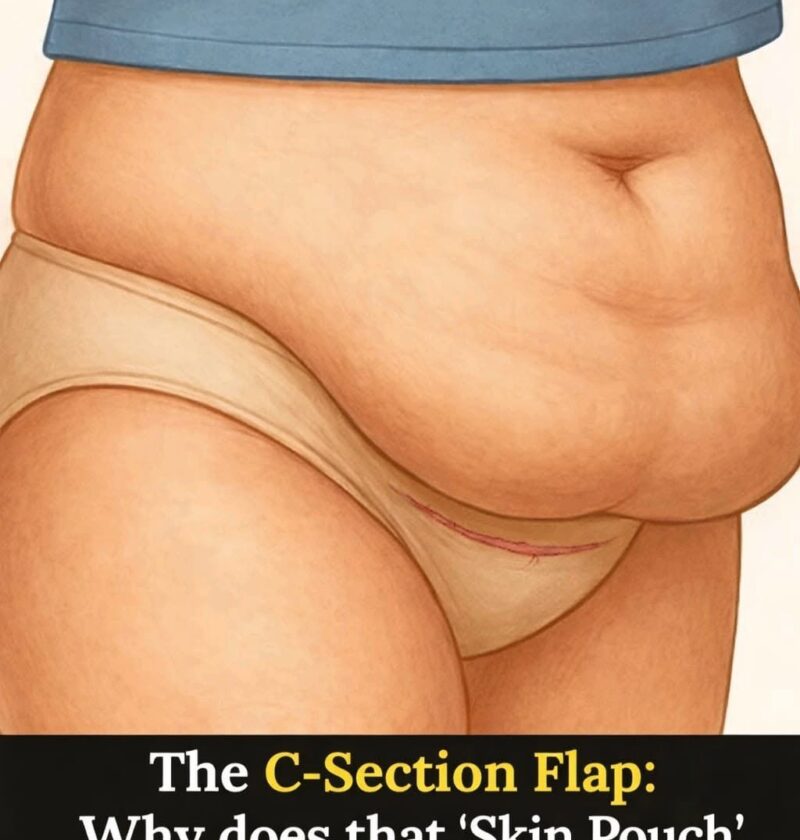
If you mean the “Cesarean section flap” or the pouch of skin that can remain after a C-section, it usually refers to the lower abdominal bulge or overhang (“C-section shelf”) that some people notice above the scar. It is not usually an actual flap or a bag of loose skin left behind.
After a C-section, several things can contribute to this appearance:
- Skin stretching: Pregnancy stretches the abdominal skin, and it may not fully tighten after delivery.
- Fat distribution: Fat stored during pregnancy may remain around the lower abdomen.
- Scar tissue and healing: The incision creates internal and external scar tissue. Scar tissue can sometimes pull the skin inward or create a fold above the scar.
- Abdominal muscle changes: Pregnancy can weaken or separate the abdominal muscles (diastasis recti), which can contribute to a lower belly bulge.
- Hormonal changes: Postpartum hormones affect skin elasticity and body composition.
Can it go away?
It often improves gradually over months as:
- The uterus shrinks back after birth.
- Abdominal strength returns.
- Weight and fluid levels stabilize.
- The scar continues to soften and remodel.
What may help
- Gentle postpartum core strengthening (when medically cleared)
- Physical therapy, especially for diastasis recti or scar mobility
- Regular movement and balanced nutrition
- Scar massage after the incision has fully healed (if approved by a healthcare professional)
When to get medical advice
Talk to a healthcare provider if you notice:
- Increasing pain, redness, warmth, swelling, or discharge around the scar
- A new lump that changes with coughing or standing (possible hernia)
- Significant abdominal separation or difficulty with daily activities
A C-section scar and lower belly shape vary widely from person to person, and the presence of a “shelf” does not necessarily indicate a problem.