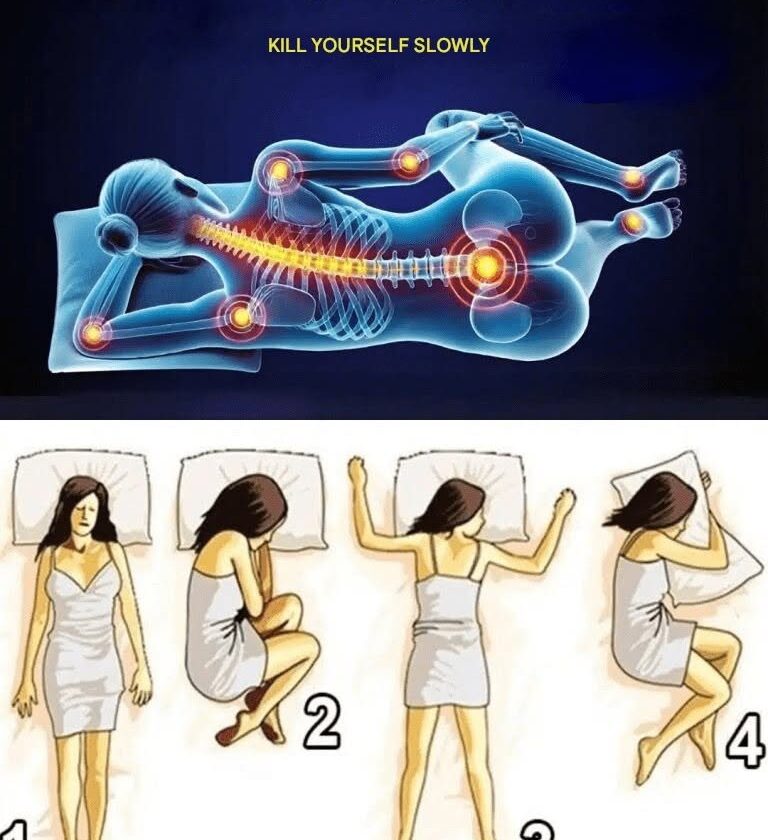
That headline is typically clickbait. There is no single “most dangerous sleeping position” that is universally harmful for everyone, but some positions can worsen certain health conditions or symptoms.
Sleep positions and what the evidence actually says
1. Sleeping on your back (supine)
Pros:
- Good for spinal alignment for many people
- Reduces facial pressure (may help skin)
Cons:
- Can worsen snoring and sleep apnea
- May increase episodes of airway obstruction in susceptible people
👉 This is often the least ideal position for people with diagnosed or suspected sleep apnea.
2. Sleeping on your stomach (prone)
This is the one most often labeled “dangerous” in viral posts.
Possible downsides:
- Strains the neck (head turned to one side for hours)
- Can stress the lower back
- May restrict natural breathing in some people
Bottom line:
Not “dangerous” for most healthy people, but often the least supportive for spine and neck health.
3. Sleeping on your side
Generally considered the best all-around position.
Benefits:
- Can reduce snoring and sleep apnea symptoms
- Often better for spinal alignment
- Left side may improve digestion and reduce acid reflux
Possible downside:
- Shoulder or hip pressure if mattress support is poor
Special cases where position matters more
- Sleep apnea: back sleeping may worsen airway collapse
- Acid reflux (GERD): left-side sleeping often helps
- Pregnancy: left-side sleeping is usually recommended for circulation
- Neck or back pain: stomach sleeping often makes it worse
Key takeaway
No sleeping position is inherently “dangerous” for most people. The real issue is how a position interacts with your health conditions and spinal support.
If you want, tell me your situation (snoring, back pain, reflux, etc.), and I can suggest the safest sleep setup for you specifically.