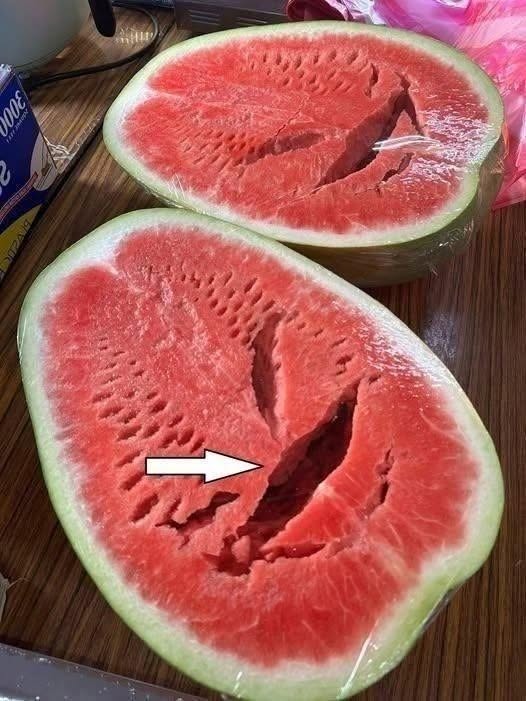
Seeing cracks inside a watermelon doesn’t automatically mean it’s dangerous. In most cases, it’s a natural or quality issue, not a health hazard.
Let’s break it down properly.
🍉 What “cracks” in a watermelon usually mean
Inside a watermelon (Watermelon), cracks or hollow-looking gaps are most often caused by:
🌱 1) Irregular growth (most common)
- Rapid growth due to water + heat changes
- Uneven ripening inside the fruit
- Creates internal “splits” or hollow areas
👉 This is usually not harmful, just a texture issue.
🍬 2) Over-ripening
- Sugar buildup causes internal tissue breakdown
- Flesh may separate or look grainy/cracked
👉 Still generally safe if it smells and tastes normal.
🚜 3) Farming or variety differences
Some varieties naturally:
- Have firmer or softer internal structure
- Show internal gaps without being spoiled
⚠️ When you SHOULD not eat it
Only avoid it if you notice:
- ❌ Sour or fermented smell
- ❌ Slimy or mushy flesh
- ❌ Mold (white, green, or black patches)
- ❌ Bitter or “off” taste
These are signs of spoilage, not cracks alone.
🧠 The key truth
Internal cracks ≠ automatically unsafe.
They usually reflect:
- Growing conditions
- Storage temperature changes
- Ripening speed
🍉 Bottom line
If your watermelon looks cracked inside but:
- smells fresh
- tastes normal
- has no mold
👉 It is generally safe to eat.
If you want, I can show you how to pick a perfect watermelon before cutting it (simple tapping + visual tricks that actually work).