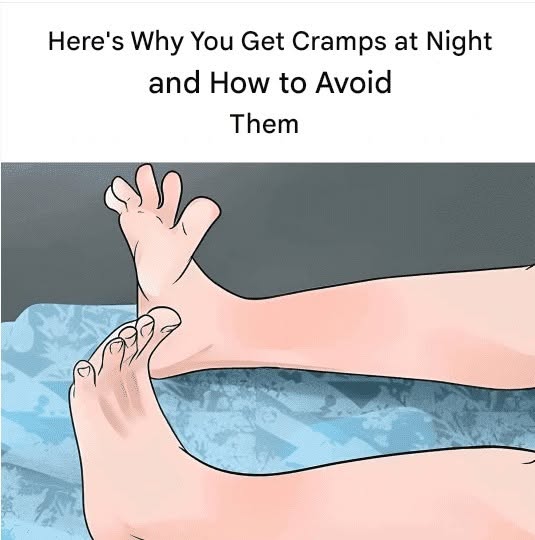
Nighttime cramps—especially in the legs or feet—are very common, and they can happen for several reasons. They are often called nocturnal leg cramps and involve sudden, painful tightening of a muscle, usually the calf.
Common reasons cramps happen at night
- Muscle fatigue or overuse
- Long periods of standing, walking, exercise, or unfamiliar physical activity can strain muscles and trigger cramps later.
- Dehydration
- Not drinking enough fluids can contribute to muscle irritability, especially after sweating or during hot weather.
- Electrolyte imbalance
- Low levels of minerals such as magnesium, potassium, or calcium may affect normal muscle contraction and relaxation. However, supplements only help when a deficiency is present.
- Staying in one position too long
- Sleeping with the foot pointed downward or keeping muscles shortened for long periods may make cramps more likely.
- Age-related muscle changes
- Older adults may experience more frequent cramps due to changes in muscles, nerves, and circulation.
- Certain medications or health conditions
- Some medicines and conditions affecting nerves, circulation, kidneys, or metabolism can be associated with muscle cramps.
What may help prevent nighttime cramps
- Stretch calf and leg muscles gently before bed.
- Stay adequately hydrated.
- Wear supportive footwear during the day.
- Keep physically active with regular, moderate exercise.
- Avoid sudden increases in exercise intensity.
When to seek medical advice
Talk with a healthcare professional if cramps:
- Happen frequently or are severe.
- Wake you regularly from sleep.
- Come with swelling, weakness, numbness, or changes in skin color.
- Started after a new medication.
During a cramp, gently stretching and massaging the affected muscle often helps it relax. For a calf cramp, straightening the leg and pulling the toes toward you can provide relief.