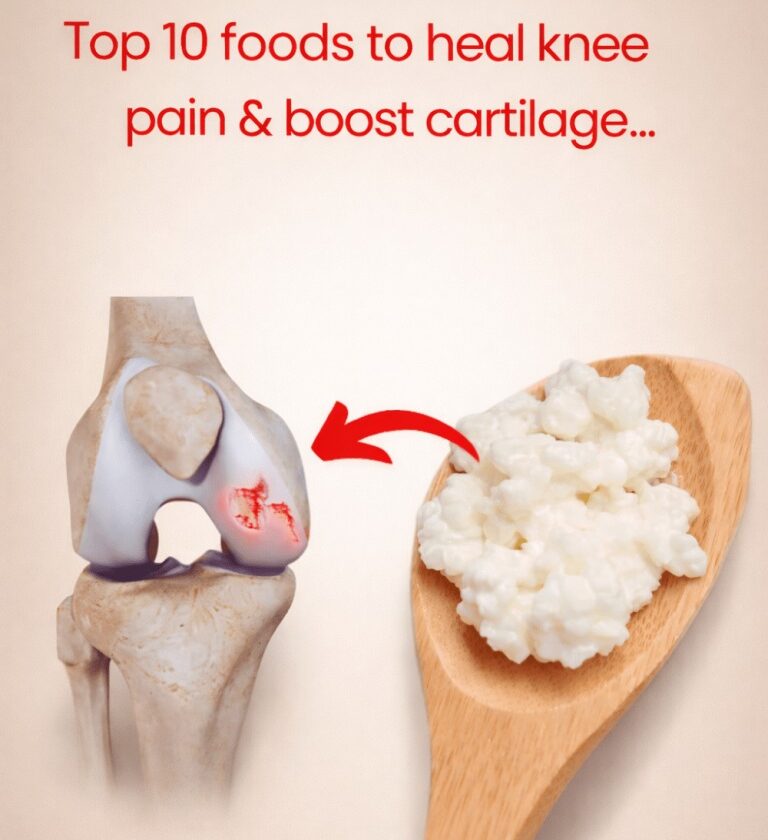
First, the truth
No food can directly “regrow” knee cartilage or “heal” knee pain on its own. Cartilage damage (like from osteoarthritis or injury) doesn’t get repaired just by eating certain foods.
But diet can help reduce inflammation, support joint health, and slow deterioration, which may reduce pain over time.
Foods that may support joint and knee health
1. Fatty fish (salmon, sardines, mackerel)
Rich in omega-3s, which can reduce inflammation and joint stiffness.
2. Olive oil
Contains anti-inflammatory compounds (similar effect to mild NSAID-like pathways, but much weaker).
3. Turmeric
Curcumin may help reduce joint pain and inflammation in some people.
4. Ginger
May help reduce inflammation and muscle/joint discomfort.
5. Leafy greens (spinach, kale, mustard greens)
High in antioxidants and vitamin K, which supports bone health.
6. Berries (blueberries, strawberries)
Rich in polyphenols that may reduce inflammation.
7. Nuts (walnuts, almonds)
Healthy fats + magnesium, helpful for overall joint support.
8. Eggs
Provide protein and nutrients needed for tissue maintenance (but don’t “repair cartilage” directly).
9. Bone broth
Contains collagen and amino acids—but evidence that it rebuilds cartilage in humans is limited.
10. Citrus fruits (oranges, lemons)
Vitamin C supports collagen formation (important for cartilage structure).
What actually matters more than food 🍽️
For knee pain and cartilage issues, these have a bigger impact:
- Maintaining a healthy weight (reduces knee load dramatically)
- Strengthening muscles around the knee (quads, hamstrings)
- Low-impact exercise (walking, cycling, swimming)
- Physical therapy if there’s injury or arthritis
Bottom line
These foods can support joint health and reduce inflammation, but they do not “rebuild cartilage” like viral posts suggest.
If you want, tell me your age + type of knee pain (after walking, climbing stairs, injury, etc.), and I can give a more targeted explanation of what’s actually likely going on.