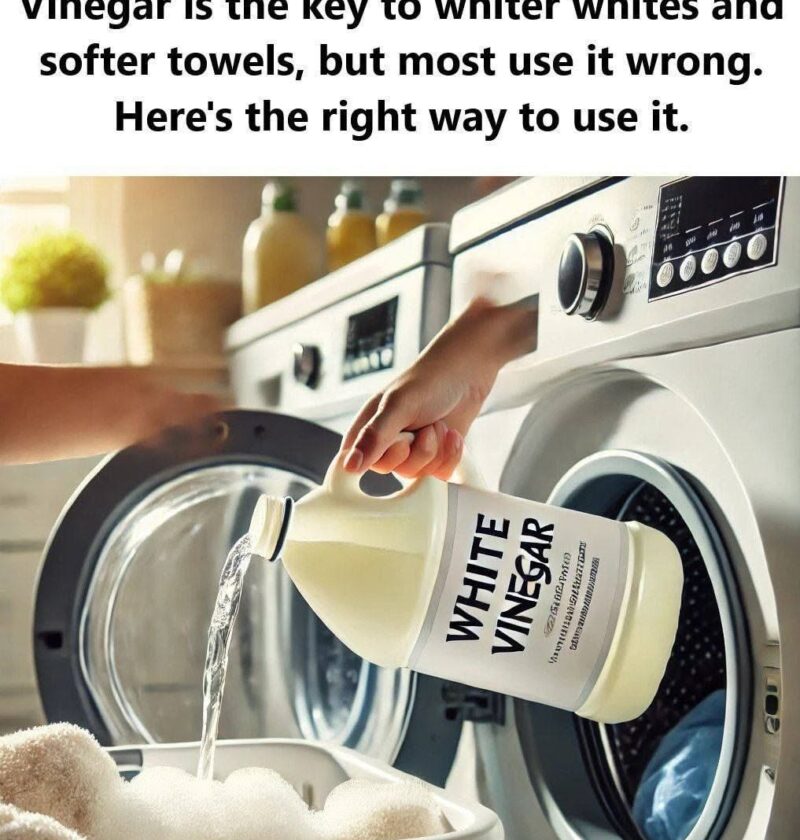
That headline is half true: vinegar can help laundry, but the “miracle whitening + soft towels” claim is exaggerated—and many people do use it the wrong way.
We’re talking about Vinegar, especially plain white vinegar.
🧺 What vinegar actually does in laundry
Vinegar works mainly because it’s mildly acidic. It can:
- Break down detergent residue left in fabrics
- Reduce soap buildup in towels (which makes them stiff)
- Help remove light odors
- Slightly brighten dull-looking whites (by cleaning residue, not bleaching)
It does not truly bleach fabric white like chlorine bleach.
❌ Common mistakes people make
- Mixing vinegar directly with bleach (dangerous gas can form)
- Using too much vinegar (can damage rubber seals over time)
- Expecting it to remove deep stains (it won’t)
- Pouring it into detergent at the same time (reduces cleaning effectiveness)
✅ The correct way to use vinegar
🧼 For softer towels
- Put ½ cup white vinegar in the fabric softener compartment
- Run a normal wash cycle (no detergent added in that step if doing a deep reset wash)
👕 For fresher, cleaner clothes
- Add ½ cup vinegar during rinse cycle
- Do not mix with detergent in the main wash
🧽 For musty washing machines
- Run an empty hot cycle with 1–2 cups vinegar once a month
⚠️ Important notes
- Never mix vinegar with bleach
- Avoid overusing on elastic fabrics or rubber parts
- For strong stains (oil, ink, blood), you still need proper stain removers or detergent treatment
If you want, I can show you a laundry routine that makes whites brighter without bleach, or how to fix hard towels in one wash cycle.