Vinegar: The Key to Whiter Whites and Softer Towels (But Most People Use It Wrong). Here’s the Right Way
White vinegar has long been a favorite household laundry helper. When used correctly, it can help remove detergent residue, reduce odors, and leave towels feeling softer—without relying on fabric softeners. However, using too much or combining it with the wrong products can do more harm than good.
Here’s how to use vinegar safely and effectively.
Why Vinegar Works
White distilled vinegar contains about 5% acetic acid, which can help:
- Dissolve soap and detergent residue
- Reduce musty or sour odors
- Soften fabrics naturally
- Help minimize static cling
- Brighten whites by removing residue that makes fabrics look dull
While vinegar can improve the appearance of whites, it does not bleach fabric the way chlorine bleach or oxygen bleach does.
The Right Way to Use Vinegar
For Softer Towels
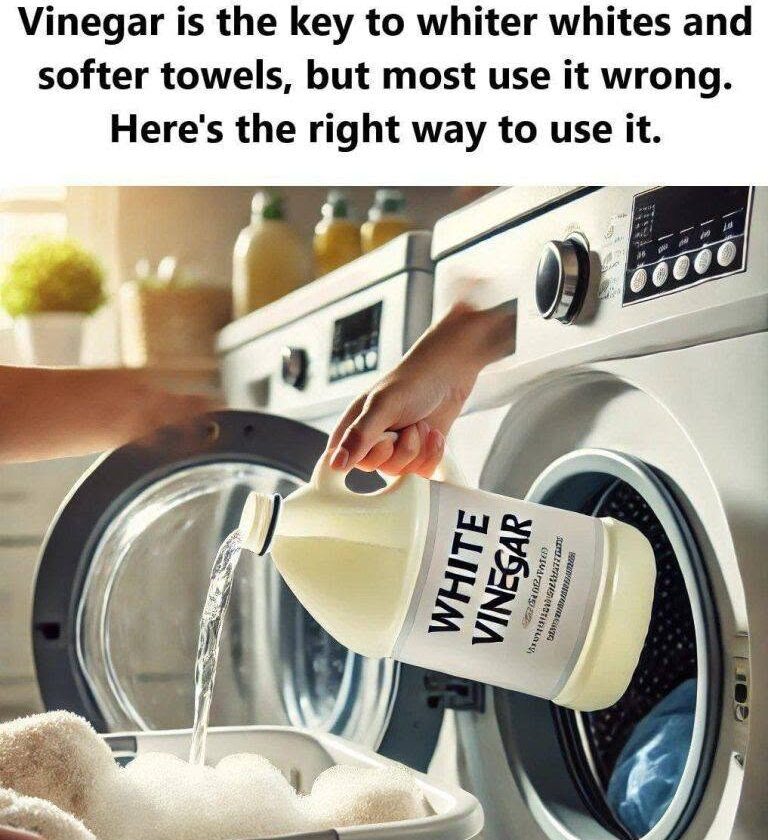
Add ½ cup (120 mL) of white distilled vinegar to the fabric softener dispenser during the rinse cycle.
This helps remove detergent buildup that can make towels feel stiff and less absorbent.
For Brighter Whites
Add ½ to 1 cup (120–240 mL) of white distilled vinegar to the rinse cycle when washing white clothing or linens. It helps rinse away mineral deposits and detergent residue that can leave whites looking dingy.
To Remove Odors
For gym clothes, kitchen towels, or musty fabrics, add 1 cup (240 mL) of white vinegar during the rinse cycle.
Common Mistakes
1. Mixing Vinegar with Bleach
Never combine vinegar and chlorine bleach.
Mixing the two can release toxic chlorine gas, which can seriously irritate or damage the eyes and lungs.
2. Pouring Vinegar Directly onto Clothes
Undiluted vinegar can be acidic enough to affect some delicate fabrics or dyes. Add it to the dispenser or dilute it in the wash water instead.
3. Using Too Much
More is not better. Excessive vinegar use may contribute to wear on some washing machine rubber seals or hoses over time, particularly if used frequently.
4. Using It on Every Load
For most households, using vinegar occasionally—such as every few washes or when towels become stiff—is sufficient.
Is Vinegar Safe for Washing Machines?
In moderate amounts, white distilled vinegar is generally considered safe for most modern washing machines. However, some manufacturers advise against frequent vinegar use because repeated exposure to acid may shorten the life of certain rubber components. If you’re unsure, check your washing machine’s care instructions.
What Vinegar Can’t Do
Vinegar is helpful, but it’s not a miracle cleaner. It won’t:
- Disinfect laundry as effectively as approved laundry sanitizers
- Remove every stain
- Replace detergent
- Bleach fabrics to a brighter white
For heavily stained or sanitized laundry, use products designed for those purposes according to their instructions.
Extra Tips for Softer, Cleaner Laundry
- Avoid using more detergent than recommended.
- Wash towels separately from clothing when possible.
- Dry towels completely before storing them.
- Periodically clean your washing machine to reduce odor and residue buildup.
- If towels remain stiff, try an extra rinse cycle to remove leftover detergent.
The Bottom Line
White distilled vinegar can be a useful, inexpensive laundry aid when used correctly. Adding it to the rinse cycle can help soften towels, reduce odors, and remove detergent residue that dulls white fabrics. Just remember: use it in moderation, never mix it with bleach, and follow your washing machine manufacturer’s guidance to keep both your laundry and your appliance in good condition.