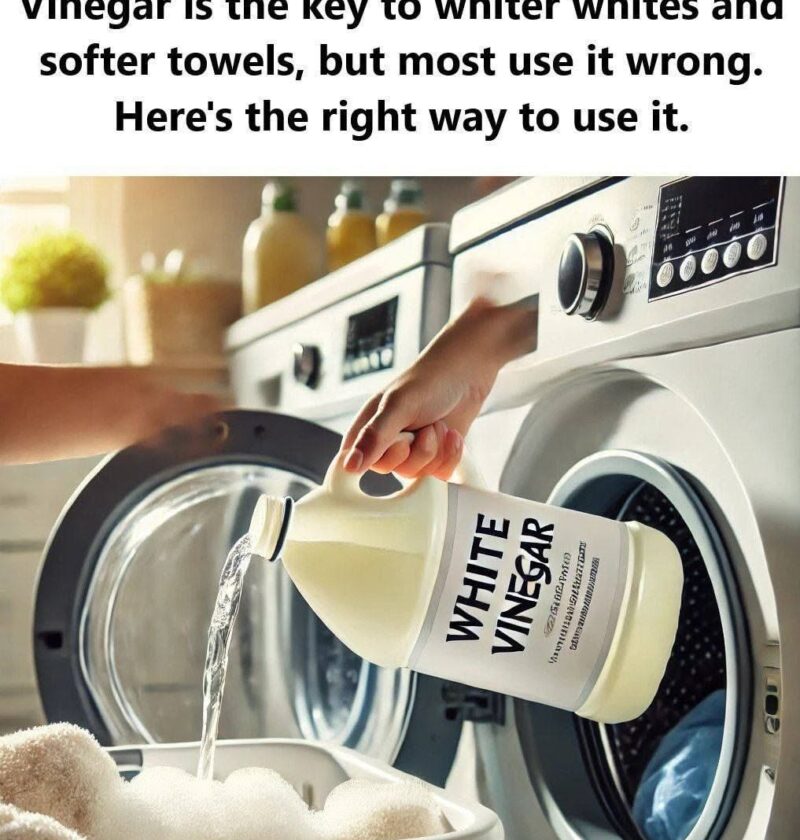
Vinegar is a popular laundry “hack” because white distilled vinegar can help remove some odors, soften fabrics, and reduce detergent residue. However, it is not a magic whitening solution, and using it incorrectly can damage some fabrics or appliances.
How vinegar can help laundry
1. Softer towels
Over time, towels can become stiff because detergent and fabric softener residues build up on the fibers. Vinegar may help break down some of that residue, allowing towels to feel softer.
How to use it:
- Add about ½ to 1 cup of white distilled vinegar to the washing machine’s rinse cycle or fabric-softener compartment.
- Do not pour it directly onto dry clothes in the drum.
2. Fresher-smelling clothes
Vinegar can help reduce some odors caused by detergent buildup and sweat residues.
3. Brighter whites (with limits)
Vinegar is not a bleach replacement. It may help remove dulling residues, but it will not usually restore heavily yellowed or stained whites.
For stubborn whites:
- Use oxygen bleach (when fabric allows)
- Treat stains before washing
- Avoid overloading the washer
Common mistakes to avoid
❌ Do not mix vinegar with chlorine bleach
- This can create dangerous chlorine gas.
❌ Do not use vinegar on every fabric
Use caution with:
- Natural stone surfaces (marble, granite)
- Some delicate fabrics
- Certain washing machine parts if used excessively
❌ Do not replace detergent with vinegar
Vinegar does not remove body oils, dirt, and stains the way laundry detergent does.
A simple towel routine
- Wash towels with the recommended amount of detergent.
- Add white vinegar during the rinse cycle occasionally if towels feel coated or stiff.
- Dry completely to prevent musty smells.
- Avoid excessive fabric softener, which can reduce towel absorbency.
Used correctly, vinegar can be a useful laundry aid—but many viral claims about it “whitening everything instantly” are exaggerated.