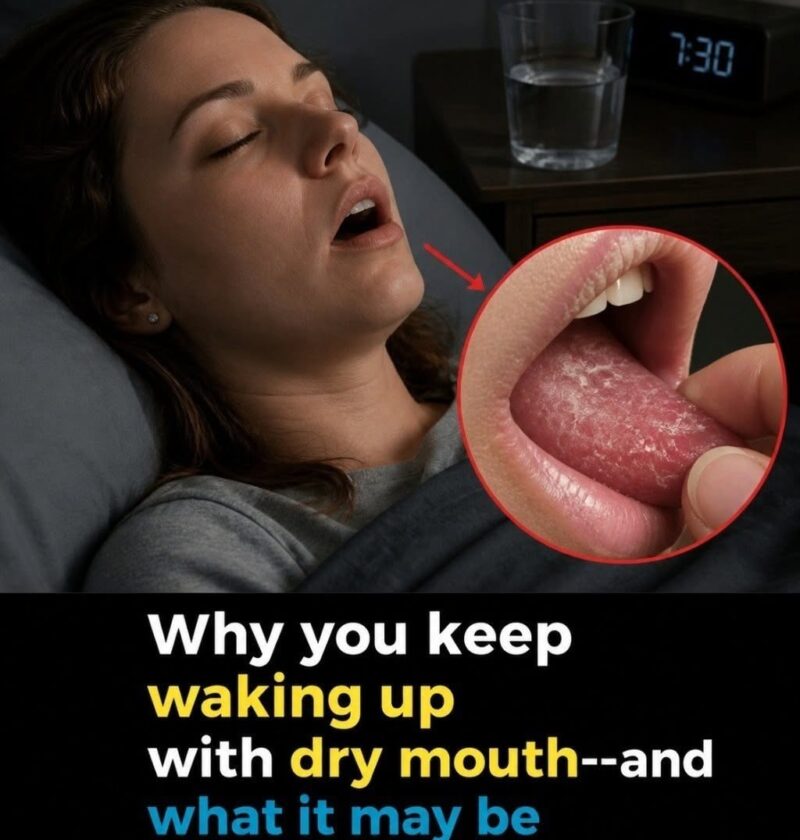
Waking up with a dry mouth is common, and it can happen for many reasons. It may simply mean your mouth dried out overnight, but it can also be a clue that something else is going on.
Possible reasons include:
- Breathing through your mouth while sleeping — often due to a blocked nose, allergies, congestion, or sleep position.
- Snoring or sleep apnea — repeated pauses in breathing during sleep can lead to mouth breathing and dryness.
- Dehydration — not drinking enough fluids, especially after exercise, illness, alcohol use, or a dry environment.
- Medications — many medicines (including some allergy, blood pressure, antidepressant, and pain medicines) can reduce saliva production.
- High blood sugar — increased thirst and dry mouth can sometimes be associated with diabetes, especially if accompanied by frequent urination or unexplained weight changes.
- Mouth or dental issues — reduced saliva can increase the risk of cavities, gum problems, and bad breath.
Things that may help:
- Drink enough water during the day.
- Consider using a humidifier if your bedroom air is dry.
- Treat nasal congestion or allergies if they are contributing.
- Avoid alcohol close to bedtime, as it can worsen dehydration.
- Maintain good oral hygiene and regular dental checkups.
Consider speaking with a healthcare professional if dry mouth is persistent, is accompanied by loud snoring, choking/gasping during sleep, extreme thirst, frequent urination, mouth sores, or difficulty swallowing.
If you mean this as a headline you saw online, I can also help check what the specific “warning” was referring to.