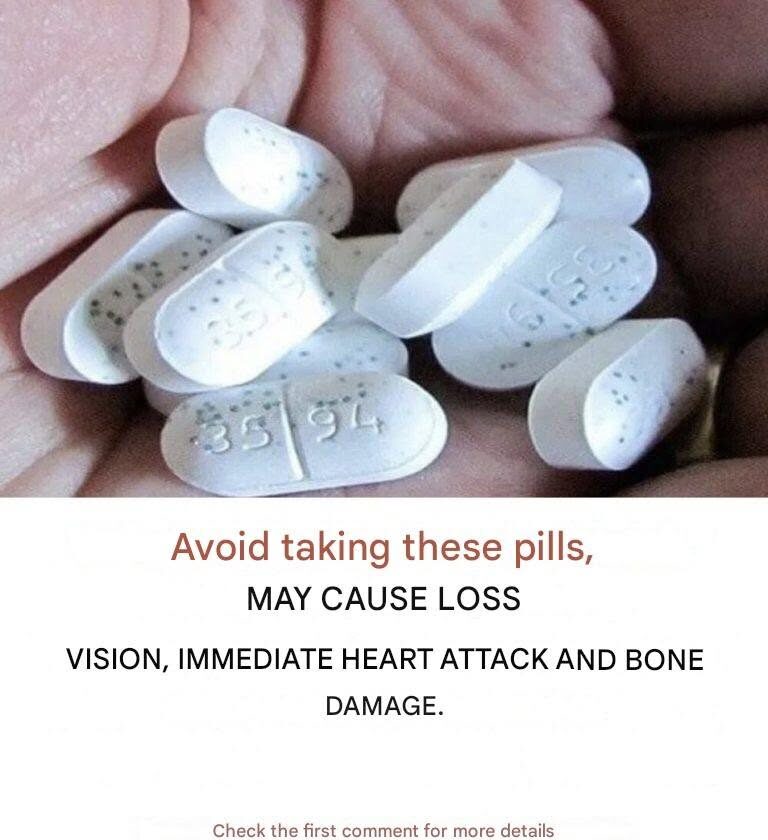
That kind of statement is alarmist and incomplete. Whether a tablet can increase risk of blood clots or heart problems depends entirely on which medication it is, the dose, and the person’s medical condition.
Blood clots and heart attacks (Myocardial infarction) are serious medical events, but no single “tablets” category can be labeled dangerous without specifics.
⚠️ Why this claim is misleading
- “These tablets” is not specific (could refer to many drugs)
- Not all medicines increase clot risk—some actually prevent clots
- Risk depends on individual factors, not just the pill itself
💊 Medicines that can increase clot risk (in certain people)
Some well-known categories include:
- Estrogen-containing contraceptives
- Hormone replacement therapy
- Some cancer treatments
- Certain anti-inflammatory drugs (increased cardiovascular risk in long-term/high-dose use)
But even in these cases:
- Risk is usually small and conditional
- Doctors prescribe them only when benefits outweigh risks
💊 Medicines that PREVENT clots
Many important medications do the opposite:
- Blood thinners (anticoagulants)
- Antiplatelet drugs (like aspirin in some patients)
These are used specifically to reduce clot and heart attack risk.
🚨 Real risk factors for blood clots
Much more important than vague “tablets”:
- Smoking
- Obesity
- Long immobility (travel, bed rest)
- Surgery or injury
- Genetic clotting disorders
- Pregnancy or postpartum period
🧠 Bottom line
This type of post is designed to scare readers but lacks critical details. The truth is:
Medication effects depend on the exact drug and patient context, not broad warnings.
If you want, tell me the exact tablet name, and I’ll explain its real, evidence-based risks and benefits clearly.