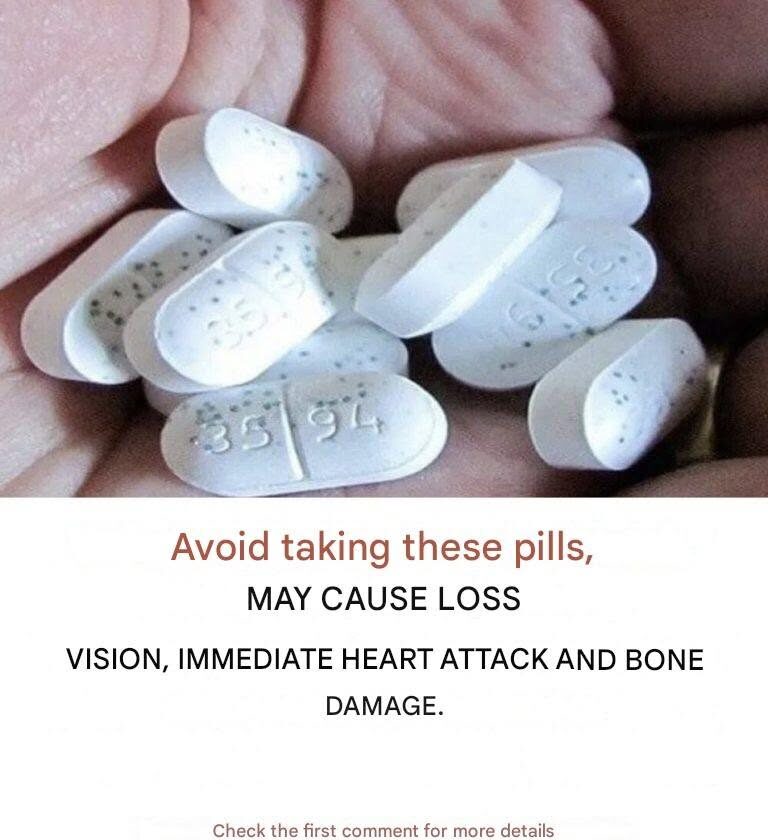
That kind of statement is too broad and potentially misleading. No medication can be safely labeled that way without specifying which drug, dose, and patient context.
Here’s what’s important to understand:
1. Not all tablets cause blood clots
Most medications do not increase clot risk. In fact, many drugs (like blood thinners) are used to prevent clots.
Only certain drug groups are associated with clot risk, for example:
- Some hormonal contraceptives (estrogen-containing pills)
- Some hormone replacement therapies
- Certain cancer medications
- A few rare or specialized drugs in specific conditions
Even in those cases, the risk is:
- usually low in healthy individuals
- dependent on dose, duration, and personal risk factors
2. “Blood thrombots” (likely meant thrombosis)
Medical thrombosis risk depends on:
- smoking
- obesity
- dehydration
- genetics (clotting disorders)
- immobility (long travel, bed rest)
- surgery or injury
Medication alone is rarely the only cause.
3. Heart attack risk is also context-dependent
Some drugs can slightly increase cardiovascular risk in certain patients, but others reduce it significantly. It depends entirely on:
- underlying heart health
- dosage
- drug class
4. Why posts like this are dangerous
Clickbait warnings like:
“THESE TABLETS CAUSE HEART ATTACKS”
are usually:
- missing the drug name
- ignoring actual risk percentages
- designed to create fear, not provide medical accuracy