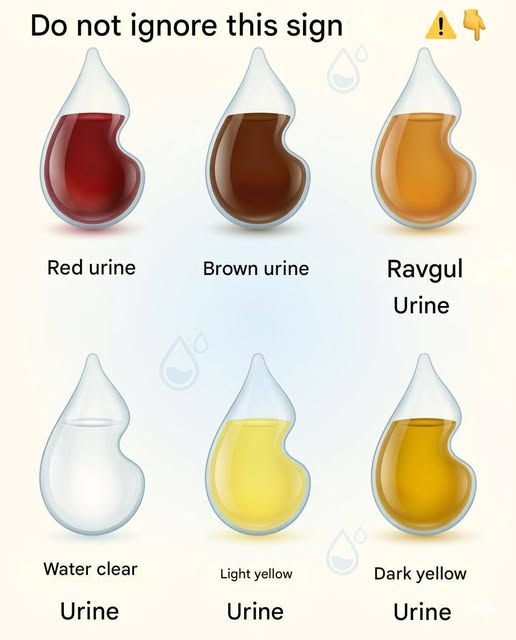
What Does the Color of Your Urine Say About Your Health?
Urine color can provide useful clues about hydration, diet, medications, and sometimes underlying health conditions. While occasional color changes are often harmless, persistent or unusual changes may warrant medical attention.
💧 Clear Urine
What it may mean:
- Very high fluid intake
- Excellent hydration
- Sometimes excessive water consumption
Clear urine is usually not a concern, but constantly colorless urine may indicate you’re drinking more water than your body needs.
🟡 Pale Yellow to Light Yellow
What it may mean:
- Healthy hydration
- Normal kidney function
This is generally considered the ideal urine color.
🌾 Dark Yellow
What it may mean:
- Mild dehydration
- Need for more fluids
Increasing water intake will often return urine to a lighter shade.
🟠 Amber or Orange
Possible causes:
- Dehydration
- Certain vitamins and supplements
- Some medications
- Occasionally liver or bile duct problems
If orange urine persists without an obvious cause, consult a healthcare professional.
🩷 Pink or Red
Possible causes:
- Beets, berries, or food dyes
- Blood in the urine
- Urinary tract issues
- Kidney stones
⚠️ Red urine that isn’t clearly linked to food should be medically evaluated.
🟤 Brown or Tea-Colored
Possible causes:
- Severe dehydration
- Liver disorders
- Certain medications
- Muscle injury in rare cases
Persistent brown urine should not be ignored.
🟢 Green or Blue
Possible causes:
- Food coloring
- Certain medications
- Rare bacterial infections
Although unusual, these colors are often related to dyes or medications.
⚪ Cloudy or Milky
Possible causes:
- Urinary tract infection
- Kidney stones
- Excess minerals in the urine
- Inflammation
Cloudy urine accompanied by pain, fever, or burning should be checked by a healthcare provider.
🚨 When to Seek Medical Attention
Contact a healthcare professional if you notice:
- Blood-red urine
- Persistent brown or orange urine
- Cloudy urine with pain or fever
- Sudden color changes that don’t improve
- Changes accompanied by swelling, fatigue, or urinary symptoms