Urine color can provide clues about hydration, diet, medications, and sometimes health conditions. Occasional color changes are often harmless, but persistent or unexplained changes can warrant medical attention.
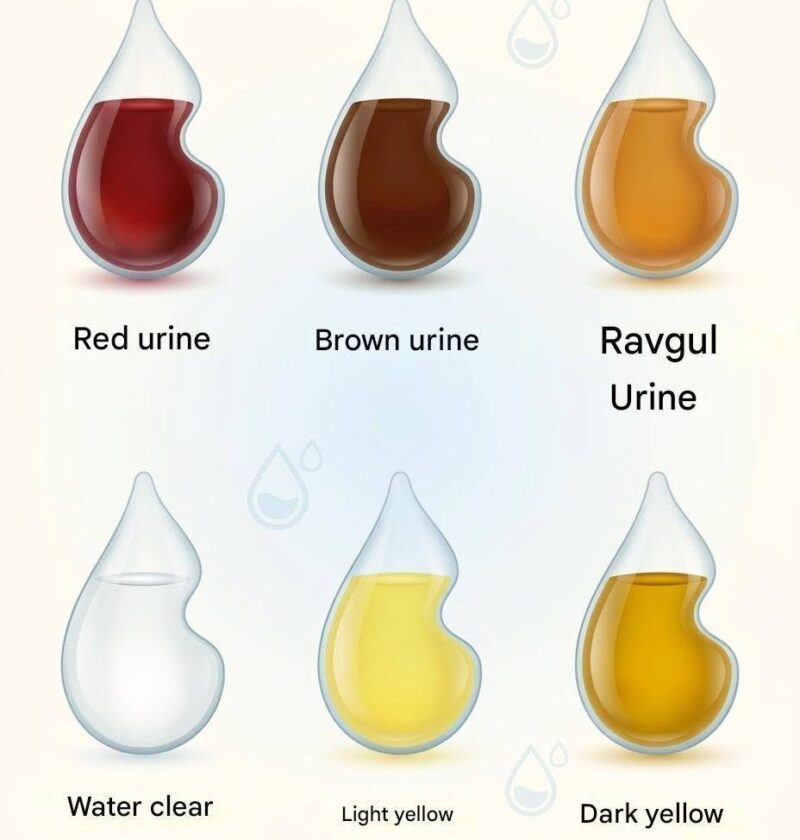
Clear
- Usually means you’re very well hydrated.
- Consistently crystal-clear urine may indicate you’re drinking more fluid than necessary.
Pale yellow to light gold
- Generally considered normal and healthy.
- The yellow color comes from a pigment called urochrome.
Dark yellow or amber
- Often a sign of dehydration.
- Drinking more fluids usually lightens the color.
Orange
- Can result from dehydration, certain vitamins (especially B vitamins), or some medications.
- Less commonly, it may be associated with liver or bile duct problems, especially if accompanied by pale stools or yellowing of the skin.
Pink or red
- May be caused by foods such as beets, blackberries, or rhubarb.
- Can also indicate blood in the urine, which may be related to infections, kidney stones, kidney disease, or other conditions.
- Persistent red urine should be evaluated by a healthcare professional.
Brown or dark cola-colored
- Can occur with severe dehydration.
- Sometimes associated with liver disease, muscle breakdown, or blood in the urine.
- Medical evaluation is recommended if it isn’t clearly explained by food or medication.
Blue or green
- Rare, but can be caused by certain medications, food dyes, or supplements.
- Occasionally linked to urinary tract infections or rare metabolic conditions.
Cloudy or milky
- May result from urinary tract infections, crystals, kidney stones, or other urinary tract issues.
- If accompanied by pain, burning, fever, or foul odor, seek medical advice.
When to seek medical attention
Contact a healthcare professional if you notice:
- Red, pink, or brown urine without an obvious dietary cause.
- Persistent cloudy urine.
- Urine color changes that don’t improve with hydration.
- Painful urination, fever, back pain, or difficulty urinating.
- Yellowing of the skin or eyes along with dark urine.
Urine color is only one clue. Symptoms, hydration status, medications, and diet are also important when interpreting what a color change might mean. If you tell me the specific color you’re seeing, I can give more tailored information.