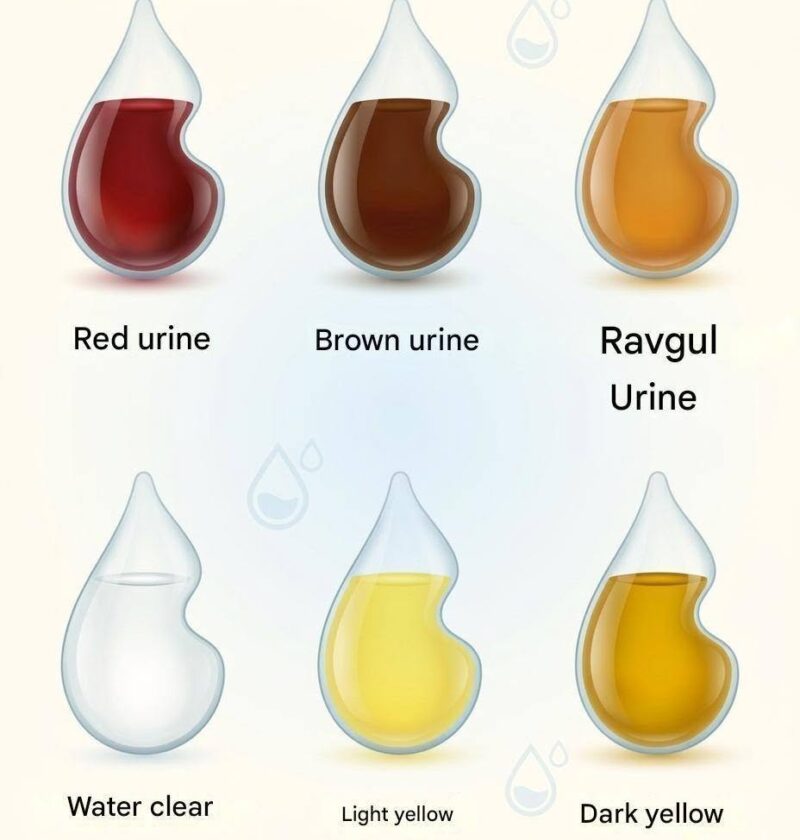
Urine color can give clues about hydration and some health conditions, but it is not a diagnosis by itself. Here’s what common colors may mean:
| Urine color | Possible meaning |
|---|---|
| Pale yellow / straw-colored | Usually a sign of good hydration and normal urine concentration. |
| Dark yellow / amber | Often means you may be dehydrated and need more fluids. |
| Completely clear | Can happen from drinking a lot of water; if persistent, it may mean you’re overhydrating. |
| Orange | May be from dehydration, certain foods, or medications (for example, some urinary medicines). If it persists, it’s worth checking with a clinician. |
| Pink / red | Can be caused by beets or certain foods, but may also indicate blood in the urine, which should be evaluated—especially if unexplained. |
| Brown / tea-colored | Can occur with severe dehydration, some medications, muscle injury, or liver-related problems; persistent brown urine needs medical advice. |
| Blue / green | Rare; may come from dyes, medications, or certain infections. |
| Cloudy / milky | Can occur with dehydration, crystals, urinary tract infections, or other conditions—especially if accompanied by pain or burning. |
| Foamy / very bubbly | Occasional bubbles are normal, but persistent heavy foam can sometimes be associated with protein in urine and should be checked. |
Other signs that matter more than color alone:
- Burning or pain while urinating
- Fever, back/flank pain
- Blood in urine
- Strong unusual odor with symptoms
- Very dark urine that does not improve after drinking fluids
- Yellowing of the eyes or skin
A simple rule: pale yellow is usually ideal; darker yellow often means “drink more water”; unusual colors that persist or come with symptoms deserve medical attention.
If you tell me your urine color, how long it has been that way, your fluid intake, and any symptoms (pain, smell, fever, medications, foods), I can help interpret it.