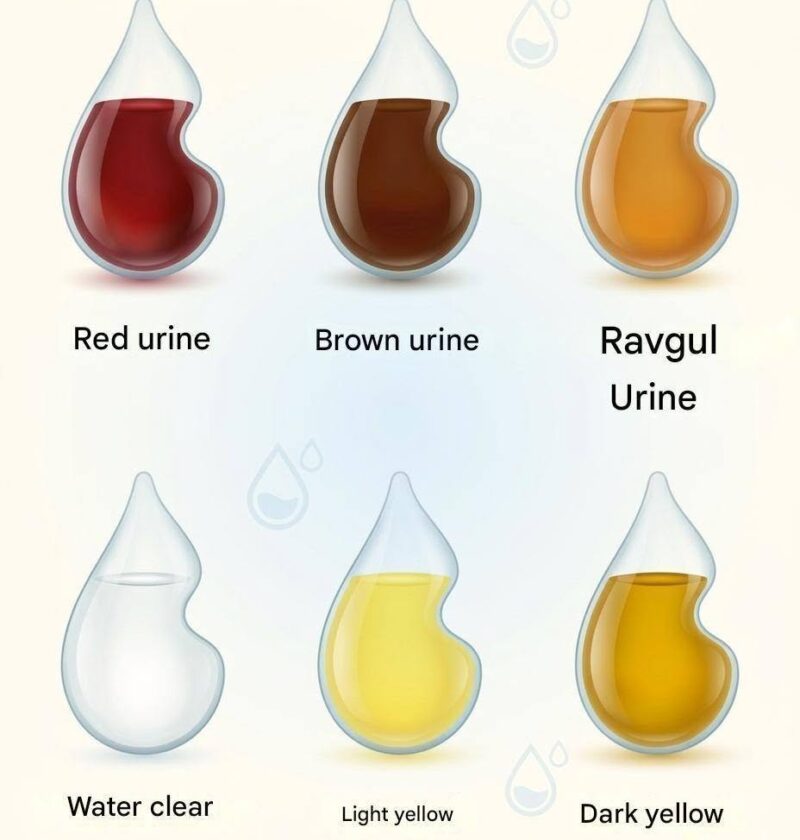
Urine color can provide clues about your hydration, diet, medications, and sometimes your health. A single change isn’t always a cause for concern, but persistent or unexplained changes deserve attention.
Here’s a general guide:
| Urine color | Possible meaning |
|---|---|
| Pale yellow to light straw | Usually normal and a sign of good hydration. |
| Dark yellow or amber | Often means you’re dehydrated and should drink more fluids (unless you’ve been advised to restrict fluids). |
| Clear | May mean you’re drinking a lot of water. Consistently clear urine isn’t usually harmful but may indicate overhydration. |
| Orange | Can result from dehydration, certain medications, or foods. Rarely, it may indicate a liver or bile duct problem, especially if accompanied by pale stools or yellowing of the skin or eyes. |
| Pink or red | May be caused by foods (such as beets or blackberries), some medications, or blood in the urine. Blood should always be evaluated by a healthcare professional, even if it goes away. |
| Blue or green | Uncommon. Can be caused by food dyes, medications, or certain rare medical conditions. |
| Brown or tea-colored | May result from severe dehydration, certain medications, muscle injury, or liver disease. It should be evaluated, especially if persistent. |
| Cloudy | May occur with urinary tract infections, kidney stones, or crystals in the urine. |
| Foamy or frothy | Occasionally happens from a strong urine stream, but persistent foamy urine may indicate excess protein and should be assessed. |
When to seek medical advice promptly
Contact a healthcare professional if you have:
- Blood in your urine.
- Brown or cola-colored urine without an obvious explanation.
- Pain or burning when urinating.
- Fever, back pain, or chills with urinary symptoms.
- Persistent cloudy or foul-smelling urine.
- Yellowing of the skin or eyes along with dark urine.
Many harmless factors—including foods (like beets), vitamins (especially B vitamins), and medications—can temporarily change urine color. If the change lasts more than a day or two or is accompanied by other symptoms, it’s a good idea to seek medical evaluation.